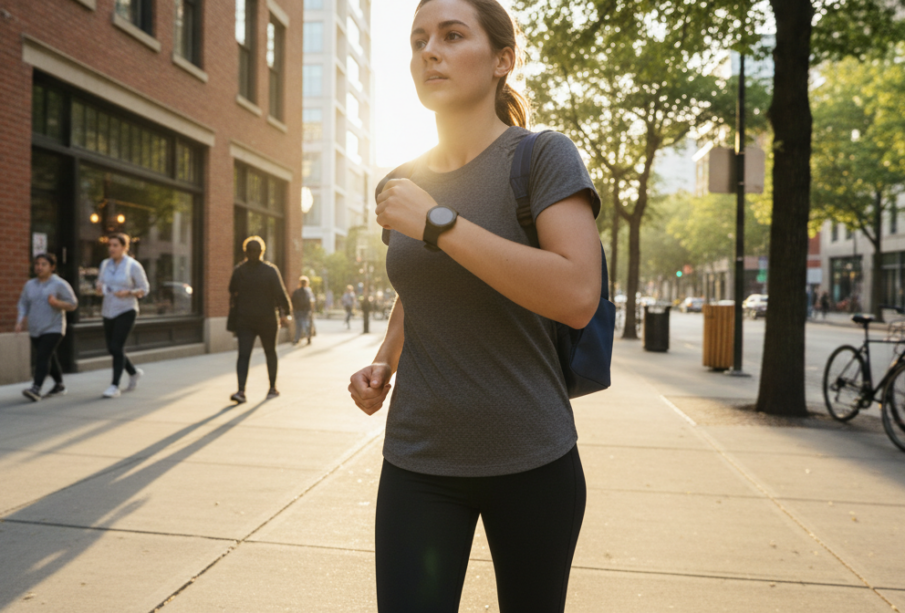
New research reveals that adding just five minutes of moderate activity to your daily routine could prevent up to 10% of deaths. It’s the kind of finding that makes you wonder why we’ve been overthinking fitness for so long.
The Five-Minute Revolution
What if I told you that the difference between a longer life and an average one could be as simple as a five-minute walk? That’s exactly what researchers from Norway, Sweden, the US, and the UK discovered when they analyzed data from over 135,000 adults.
Published in The Lancet this January, the study found that adding just five minutes of moderate-to-vigorous physical activity per day could prevent up to 10% of deaths when applied across the broader population. For the least active people – those who currently get only about two minutes of moderate activity daily – even that tiny five-minute boost could prevent 6% of deaths.
The numbers are staggering when you think about it. We’re talking about walking at roughly 3 mph for five minutes. That’s barely enough time to listen to two songs on Spotify.
Why Small Changes Pack Such a Big Punch
Here’s where it gets interesting: the research challenges everything we think we know about exercise thresholds. The CDC recommends 150 minutes of moderate-intensity activity per week – that’s about 21 minutes daily. While that’s still the gold standard, this study proves that benefits don’t start only after you hit that magic number.
‘Health benefits may begin at low levels of activity, particularly for those who are sedentary,’ the researchers noted. It’s like compound interest for your body – small, consistent investments pay off exponentially over time.
The study also looked at sitting time, finding that reducing daily sedentary behavior by 30 minutes could prevent about 7% of deaths across the population. For context, the average adult spends about 10 hours sitting each day.
The Science Behind the Numbers
The research team used device-measured physical activity data rather than relying on people’s often-inaccurate self-reports. They followed participants for an average of eight years, tracking everything from heart rate monitors to accelerometers.
What makes this study particularly compelling is its focus on realistic, achievable changes. Instead of asking ‘What happens when people meet ideal exercise benchmarks?’ the researchers asked ‘What happens when people make small, realistic shifts?’
Dr. Daniel Bailey from Brunel University, who wasn’t involved in the study, put it perfectly: ‘This should be feasible for most people, even those who only do very small amounts of physical activity already.’ He emphasized that moderate activities are simply those that make you breathe a bit heavier and feel warmer – think brisk walking, housework, or gardening.
Beyond Exercise: The Lifestyle Trifecta
A companion study published in eClinicalMedicine took things further, examining how small improvements in sleep, physical activity, and diet work together. The findings? For people with the worst combination of all three habits, adding just five minutes of sleep, two minutes of moderate activity, and half a serving of vegetables daily could theoretically add an entire year to their lives.
The optimal combination – seven to eight hours of sleep, more than 40 minutes of moderate activity, and a healthy diet – was associated with over nine additional years of life and good health compared to those with the worst habits.
What’s fascinating is that these behaviors amplify each other. To gain one extra year through sleep alone would require 25 additional minutes daily, but when combined with small improvements in activity and diet, just five extra minutes of sleep does the trick.
The message is clear: you don’t need to overhaul your entire life. Sometimes the smallest changes create the biggest ripples. In a world obsessed with extreme fitness transformations and biohacking, maybe the real secret to longevity has been hiding in plain sight – in those five minutes we spend scrolling our phones instead of taking a quick walk around the block.






We bring you daily news from around the world. From technology to lifestyle to design and music.