After the 12-day war in June 2025, the age-old question of who’s more powerful between Iran and Israel got a real-world test. The answer? It’s complicated.
Picture this: you’re comparing two fighters before a big match. One’s got the size advantage – nearly 74 times bigger territory, almost four times the troops. The other’s got the tech edge, better training, and a powerful ally in their corner. That’s basically Iran versus Israel in a nutshell.
The June 2025 conflict gave us our first real glimpse of how these two regional powers stack up when the gloves come off. For 12 days, the world watched as Netanyahu‘s forces launched what they called a preemptive strike against Iran’s nuclear facilities, only to see Tehran fire back with everything it had.
The raw numbers tell one story. Iran fields roughly 610,000 active troops compared to Israel’s 169,500 – that’s a massive 3.6-to-1 advantage. Add in reserves, and Iran can theoretically mobilize close to a million personnel. Iran’s also got more tanks, more artillery, and a bigger navy. It’s like bringing a heavyweight to fight a middleweight.
But here’s where it gets interesting. Size isn’t everything in modern warfare.
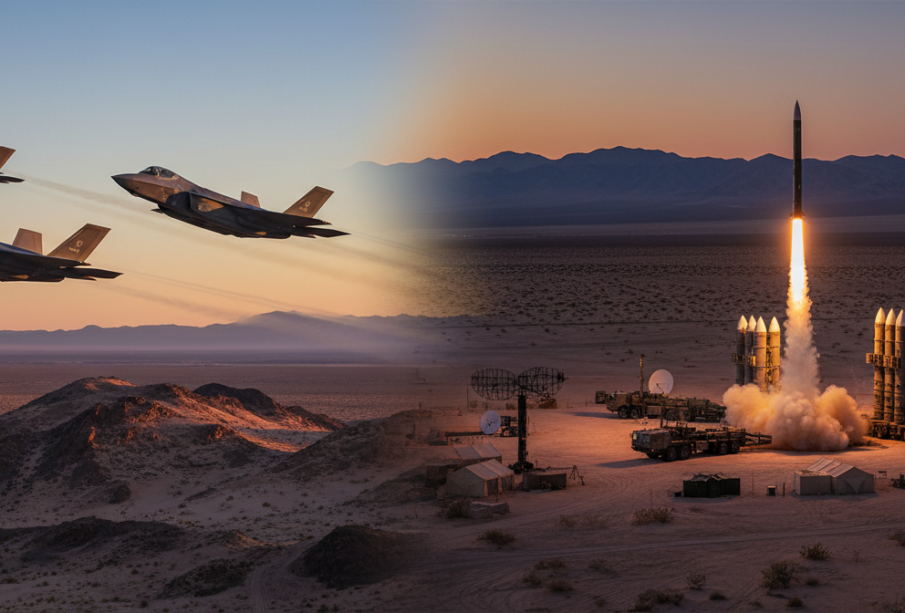
Israel‘s military budget of $46.5 billion absolutely dwarfs Iran’s $7.9 billion – nearly six times larger despite having a fraction of the population. That money buys some serious hardware: F-35 stealth fighters, advanced missile defense systems like Iron Dome and Arrow, and intelligence capabilities that are frankly scary good.
The June war proved this point dramatically. Israeli strikes ‘overwhelmed Iran’s air defenses and sabotaged its military assets with apparent ease,’ according to military analysts. Iran launched hundreds of missiles and drones, but most were intercepted. Meanwhile, Israel’s precision strikes took out key Iranian military leaders, including Hossein Salami, head of the Islamic Revolutionary Guard Corps.
Casualties tell the story: Iran reported over 1,000 dead, while Israel lost 28 people. That’s a 35-to-1 ratio that speaks volumes about technological superiority versus raw numbers.
But Iran’s got some serious cards to play too. The country has spent decades building what it calls the ‘Axis of Resistance’ – a network of allied militant groups across the region. Think Hezbollah in Lebanon, various militias in Iraq and Syria, and the Houthis in Yemen. It’s like having backup dancers who can cause trouble while you’re dealing with the main act.
Then there’s geography. Iran’s landmass is roughly 636,000 square miles compared to Israel’s 8,600 square miles. That’s a lot of space to hide missile launchers, command centers, and nuclear facilities. During the June conflict, even with U.S. bunker-buster bombs, some of Iran’s underground uranium stockpiles remained untouched.
The nuclear question adds another layer of complexity. Israel is widely believed to possess 80-200 nuclear warheads, though they maintain their policy of ‘nuclear ambiguity.’ Iran, despite years of enrichment, doesn’t have the bomb yet – though they’ve got enough highly enriched uranium to make several if they wanted to.
Trump‘s involvement in June 2025 highlighted another crucial factor: Israel’s alliance with the world’s most powerful military. When Israeli forces couldn’t penetrate Iran’s deepest nuclear facilities, American B-2 bombers finished the job. That’s the kind of backup that money can’t buy.
So who’s more powerful? The June war suggests it depends on what kind of fight we’re talking about. In a short, high-tech conflict, Israel’s technological edge and American support give it a decisive advantage. But in a prolonged war of attrition, Iran’s size, resources, and regional network could wear down even the most advanced military.
The real lesson from June 2025 might be that neither country can deliver a knockout punch to the other. Israel can inflict massive damage quickly, but Iran can absorb it and keep fighting. Iran can cause serious pain with its missile arsenal and proxies, but it can’t overcome Israel’s defensive systems and technological superiority.
As we’ve seen with the renewed conflict in February 2026, this dynamic creates a dangerous cycle. Neither side can win decisively, so both keep trying. And with each round, the stakes get higher and the potential for a wider regional war grows.
The numbers matter, but in the end, it’s not just about who has more tanks or better jets. It’s about strategy, alliances, and the willingness to absorb punishment while dishing it out. On that score, both Iran and Israel have proven they’re in it for the long haul.


Leave a reply



We bring you daily news from around the world. From technology to lifestyle to design and music.