As missiles streak across Middle Eastern skies, Australia finds itself drawn deeper into America’s war with Iran while its Prime Minister faces fierce criticism from an unlikely opponent at home.
The Two-Hour Decision
On the evening of February 28, 2026, as Trump declared war on Iran, Prime Minister Anthony Albanese made what may prove to be the defining decision of his tenure. Within two hours of the American president’s announcement, Australia had formally endorsed military action that would kill thousands and reshape the Middle East.
The speed was breathtaking. Less time than it takes to watch a movie, and Australia was committed to supporting strikes that would claim the life of Iran’s Supreme Leader and trigger a regional conflagration. No cabinet meeting. No parliamentary debate. Just a prime minister racing to align with an American president whose own military advisers had warned against the operation.
It’s a decision that now haunts Albanese as Australian surveillance aircraft patrol Gulf skies and RAAF personnel find themselves 9,300 miles from home, helping defend the UAE against Iranian retaliation.
Grace Tame’s Orwellian Nightmare
The criticism came from an unexpected quarter. Grace Tame, the 2021 Australian of the Year and sexual abuse survivor advocate, unleashed a scathing attack that cut to the heart of Australia’s foreign policy contradictions.
‘We’re living in an Orwellian nightmare,’ she wrote in a blistering essay, calling Albanese a ‘coward’ and ‘turncoat’ who had ‘capitulated to foreign powers.’ The language was stark, uncompromising – and it stung precisely because it came from someone who had spent years fighting institutional power.
Tame’s intervention wasn’t just about foreign policy. It was personal. Days earlier, at a News Corp summit in Melbourne, Albanese had described her as ‘difficult’ in a word-association game. The comment, seemingly throwaway, revealed something deeper about how power views dissent. When pressed later, Albanese’s non-apology – claiming he meant she’d had a ‘difficult life’ – only made things worse.
‘To the prime minister, I am difficult precisely because I have been outspoken,’ Tame observed. The irony was unmistakable: a leader who could commit to war in two hours needed 24 hours to offer even a grudging clarification about a woman who had survived institutional abuse.
The Military Escalation
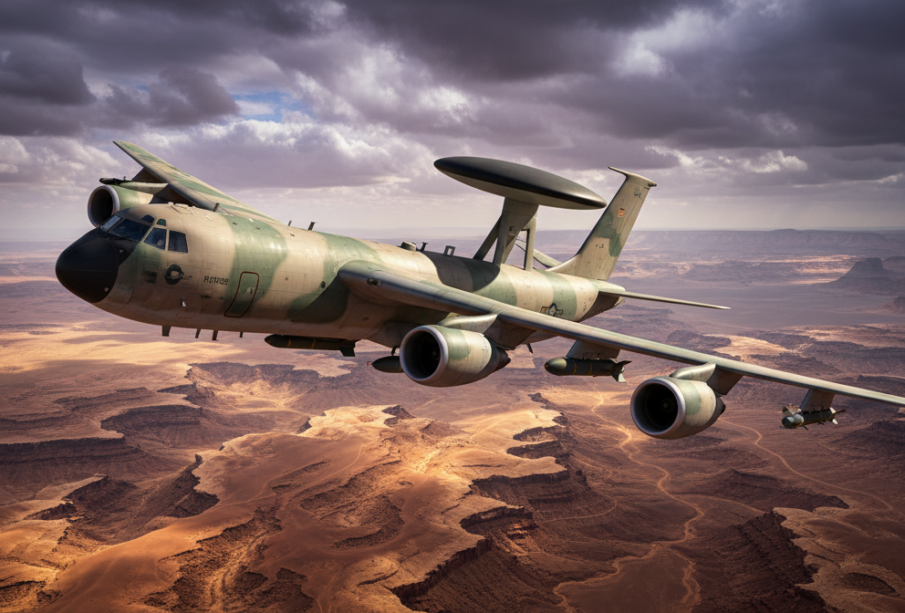
By March 10, Australia’s involvement had deepened considerably. Albanese announced the deployment of an E-7A Wedgetail surveillance aircraft, 85 personnel, and advanced air-to-air missiles to help the UAE defend against Iranian attacks. The mission, officially defensive, represents Australia’s most significant military commitment to the Middle East since the Iraq War.
The numbers tell the story of Iran’s retaliation: over 1,500 rockets and drones launched at the UAE alone, with Dubai International Airport briefly closing as passengers sheltered from incoming missiles. Six people have died in the UAE, 131 injured, as interceptor debris rains down on residential areas.
Australia’s AIM-120 AMRAAM missiles, worth millions of dollars, now arm Emirati F-16 fighters. The Wedgetail aircraft, based likely at Al Minad Air Base 25 miles south of Dubai, provides early warning of Iranian drone swarms. It’s sophisticated, expensive, and puts Australian personnel directly in harm’s way.
Defense analysts warn this could be just the beginning. With the Strait of Hormuz threatened and oil prices soaring, Australia may face pressure to join efforts to keep the waterway open – a mission that would put Australian forces in direct confrontation with Iranian naval units.
The Price of Alignment
The contrast between Albanese’s responses reveals much about modern Australian politics. When Grace Tame challenged him, it took a day to respond with a half-hearted clarification. When Trump called for war, it took two hours to offer full support.
This isn’t lost on critics across the political spectrum. Independent MP Andrew Wilkie, who resigned from intelligence services over the Iraq War’s fraudulent justifications, sees ‘alarming parallels’ with 2003. Labor MPs privately question why their party rushed to endorse strikes likely in breach of international law.
The human cost continues to mount. Over 1,200 people have died in Iran, including 170 schoolchildren killed when a U.S. missile struck near their school. Seven American soldiers are dead, with Australia’s military assets now potential targets for Iranian retaliation.
As I’ve learned from covering conflicts across the Middle East, wars that begin with confident predictions of quick victory rarely end as planned. Australia now finds itself committed to a conflict with no clear exit strategy, supporting a president whose own generals worry about his judgment, while facing criticism from a sexual abuse survivor who dares to call it what it is: capitulation to foreign power.
The question isn’t whether Grace Tame is ‘difficult.’ It’s whether Anthony Albanese will answer the substantive legal and ethical objections she raises, or whether political expedience will continue to trump moral courage.

Leave a reply



We bring you daily news from around the world. From technology to lifestyle to design and music.