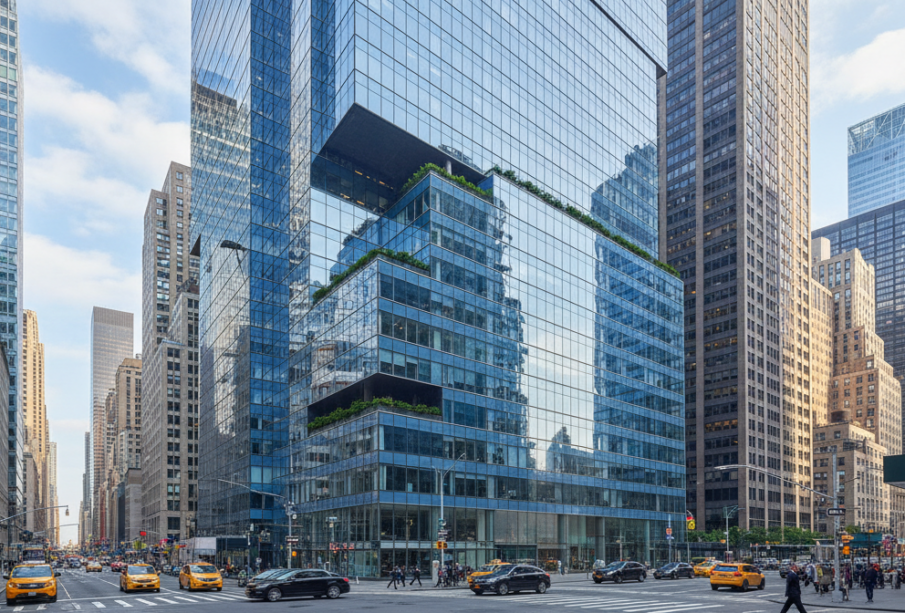
The coworking giant that once dominated headlines for all the wrong reasons is quietly rebuilding its empire in Manhattan, signing new leases and achieving its first sustained period of profitability.
The Phoenix Rises in Midtown
WeWork just inked a deal for 37,000 square feet at 511 Fifth Ave. between East 42nd and 43rd streets. It’s a modest footprint compared to the company’s heyday, but it represents something more significant: a disciplined approach to growth that would have been unthinkable during the Adam Neumann era.
The deal adds to WeWork’s current 3.3 million square feet across 36 Manhattan locations. That’s down from the 5 million square feet the company boasted before its spectacular 2019 meltdown, but up from the shrunken portfolio after its 2023 bankruptcy filing. Think of it as the Goldilocks zone for a company that once seemed allergic to the concept of ‘just right.’
Numbers Don’t Lie
Here’s what catches my attention: WeWork has achieved positive EBITDA for six consecutive months through early 2025. For a company that burned through cash like a tech startup at a Vegas convention, that’s nothing short of remarkable.
Revenue hit $3.98 billion in 2025, up 8.5% from the previous year. The company projects a net profit of $101 million for 2025, with expectations of $343 million by 2028. These aren’t the hockey-stick projections that got WeWork in trouble before – they’re the kind of steady, sustainable numbers that actually mean something to investors who’ve been burned before.
CEO John Santora, a former Cushman & Wakefield veteran, told the Real Deal NYC Forum that the company is paying ‘market rents’ – a refreshing change from the days when WeWork outbid everyone at prices that made seasoned brokers wince.
The New WeWork Playbook
Gone are the summer retreats where employees stood in mud holding hands. The new WeWork operates with the precision of a Swiss watch, not the chaos of a startup party.
The company renegotiated over 190 leases and exited 170 unprofitable locations during its bankruptcy reorganization. It’s now backed by Yardi Systems, which invested $337 million as part of a $450 million restructuring. The result? A debt-free balance sheet and a business model that actually makes sense.
WeWork’s Manhattan occupancy rate sits at 87%, according to global head of real estate Peter Greenspan. The company has converted many conventional leases into profit-sharing arrangements – the kind of creative deal-making that shows they’ve learned from past mistakes.
Enterprise Clients Drive Growth
The most telling sign of WeWork’s transformation? Its client roster reads like a Fortune 500 directory. Amazon has signed agreements for spaces in New York, Mountain View, and Dallas. The company counts 220 AI firms among its global tenants.
This isn’t the WeWork of beer taps and ping-pong tables. It’s a mature real estate company that happens to offer flexible workspace solutions. The shift from ‘tech disruptor’ to ‘real estate operator’ might not sound sexy, but it’s exactly what the company needed.
WeWork is investing between $80 million and $100 million in 2025 to upgrade its global locations. In Manhattan alone, the company operates 35 locations with around 3 million square feet of office space. The average office occupancy rate in Manhattan has hit a record high of nearly 14%, creating a favorable environment for WeWork’s disciplined expansion.
Lessons from the Ashes
The contrast with the Neumann era couldn’t be starker. Where once WeWork announced deals weekly at high-profile locations like the Lord & Taylor building on Fifth Avenue (which it later abandoned to Amazon), today’s approach is methodical and data-driven.
The company’s partnership with the Ritz-Carlton Leadership Center to train staff in hospitality services shows a commitment to operational excellence that was notably absent in the early days. It’s the kind of attention to detail that separates successful real estate companies from failed experiments.
WeWork’s story offers a masterclass in corporate resurrection. Sometimes the best way forward is to strip away the hype, focus on fundamentals, and build something sustainable. In Manhattan’s competitive office market, that approach is finally paying dividends.







We bring you daily news from around the world. From technology to lifestyle to design and music.