When Politicians Become Deepfake Targets: The Vietnam Connection Exposed
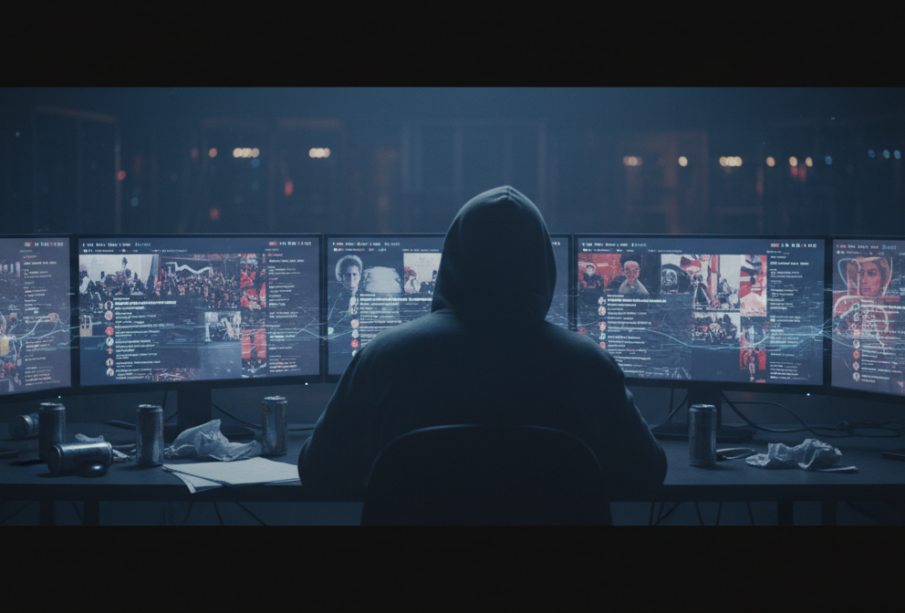
A BBC investigation uncovered a network of Vietnam-based Facebook pages using AI to create fake news about UK politicians, forcing Meta to take action as election officials scramble to develop detection tools.
The Digital Puppet Show
Picture this: Nigel Farage storming out of a BBC interview after a heated argument with Laura Kuenssberg. Sounds plausible, right? Except it never happened. The video showing this dramatic confrontation was completely fabricated using artificial intelligence, part of a sophisticated network of fake news operations that Meta was forced to shut down after a BBC Wales investigation.
The scale is staggering. Thousands of followers, hundreds of posts, and all of it orchestrated from thousands of miles away in Vietnam. These weren’t your typical internet trolls – they were running what experts call ‘content farms,’ churning out AI-generated stories about British politicians with the efficiency of a digital assembly line.
What makes this particularly unsettling is how convincing some of these deepfakes have become. We’re not talking about obviously fake videos that look like they were made in someone’s basement. These are sophisticated manipulations that can fool casual viewers scrolling through their Facebook feeds.
The Money Trail
Here’s where it gets interesting from a business perspective. Professor Martin Innes from Cardiff University’s Crime and Security Research Institute believes these operations are ‘driven by a profit imperative.’ The creators will ‘do anything where they think they can get eyeballs on their content if it will make them money.’
These Vietnam-based pages weren’t just spreading misinformation for political reasons – they were potentially making money from Facebook’s monetization program. Every click, every share, every outraged comment could translate into revenue. It’s a perverse incentive system where fake news literally pays.
The investigation found pages with names designed to sound like legitimate UK news outlets, but Facebook’s transparency features revealed their true location. Some had thousands of followers, suggesting either genuine reach or sophisticated bot networks designed to game the algorithm.
Politicians in the Crosshairs
The targets weren’t limited to one political party or ideology. Boris Johnson, Rishi Sunak, Sir Keir Starmer, and Zia Yusuf all found themselves starring in fabricated scenarios. Sometimes the fake stories were positive – showing politicians adopting dogs or donating to charity. Other times, they depicted arrests or health scares that never happened.
Labour MP Alex Davies-Jones captured the emotional toll perfectly: ‘I don’t think you’ll find a politician who hasn’t had this done to them… to say it out loud makes me feel quite sad.’ It’s a reminder that behind the political personas are real people dealing with the psychological impact of seeing themselves in fabricated, often compromising situations.
The creativity of these fake scenarios is almost impressive in its audacity. Politicians were shown in identical situations across multiple posts, suggesting a template-based approach to misinformation. One day it might be a hospital visit, the next a dramatic resignation – all completely fictional.
The Detection Race
While Meta removed some pages after BBC’s inquiry, new ones kept popping up almost daily. It’s like a digital game of whack-a-mole, except the stakes are democratic integrity.
The Electoral Commission isn’t sitting idle. They’re developing software to spot and combat deepfakes ahead of the Welsh and Scottish parliament elections in May 2026. Officials are working ‘at speed’ with the Home Office on pilot projects that could detect AI-generated content before it spreads.
Sarah Mackie, the commission’s chief in Scotland, explained that if their software detects a hoax, they’ll contact police, the targeted candidate, and inform the public. But she acknowledged a crucial limitation – the technology can’t always provide 100% certainty.
The challenge is immense. As AI tools become more sophisticated and accessible, the barrier to creating convincing deepfakes continues to drop. What once required Hollywood-level resources can now be accomplished with consumer-grade software and a decent internet connection.
Beyond Politics: The Bigger Picture
This isn’t just about UK politics. Recent investigations have found that scammers are spending millions on Facebook ads featuring deepfakes of prominent figures like President Trump and Elon Musk to promote fake government benefits. The Tech Transparency Project identified 63 scam advertisers who collectively ran more than 150,000 political ads, spending $49 million.
The targeting is often cynical and precise. Many ads specifically target seniors with fake Medicare and Social Security offers, exploiting both technological unfamiliarity and financial anxiety. It’s a reminder that deepfake technology isn’t just a political problem – it’s becoming a tool for financial fraud on an industrial scale.
What’s particularly concerning is how platforms seem to struggle with enforcement. Ads and accounts were often only sanctioned after spending large amounts – sometimes around $1 million. Current and former employees suggest that Meta is reluctant to add impediments for ad-buying clients who drove significant revenue growth.
The solution isn’t just technological – it requires a combination of better detection tools, stricter platform policies, media literacy education, and potentially new legislation. As one expert noted, we’re in a race between the technology that creates these fakes and the technology that detects them. Right now, it’s not clear who’s winning.






We bring you daily news from around the world. From technology to lifestyle to design and music.