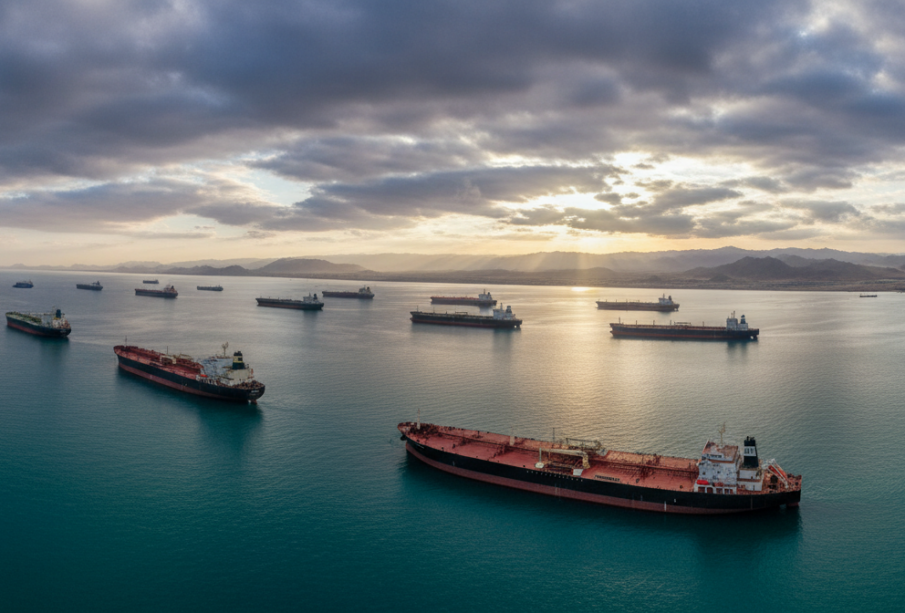
The assassination of Ayatollah Ali Khamenei in joint US-Israeli strikes has triggered massive retaliation across the Gulf, threatening the world’s most critical oil shipping route.
A Seismic Shift in Tehran
In my fifteen years covering the Middle East, I’ve witnessed many pivotal moments, but nothing quite like this. The confirmation that Iran’s Supreme Leader Ayatollah Ali Khamenei was killed in Saturday’s joint US-Israeli strikes marks the most dramatic escalation in regional tensions since the 1979 revolution. The 86-year-old ayatollah, who had ruled Iran for over 36 years, died when Israeli jets dropped 30 bombs on his compound in Tehran during what officials described as a ‘massive, wildly bold daytime attack.’ The strike, which began at 8:10 AM local time on February 28, also killed several family members and top Iranian officials, including his daughter, son-in-law, and grandson.
Retaliation Across the Gulf
The response was swift and devastating. Within hours of President Trump’s confirmation of Khamenei’s death, Iranian forces launched retaliatory strikes across multiple countries. Explosions rocked Dubai, Doha, Manama, and Abu Dhabi as Iran targeted US assets throughout the Gulf region. The scale of the retaliation caught many by surprise – this wasn’t the measured response we’ve seen in previous escalations, but rather an all-out assault on American interests across the region.
From my contacts in the region, the situation on the ground is chaotic. At least 150 oil tankers have dropped anchor in open Gulf waters, afraid to transit the increasingly dangerous waterway. The US Navy’s 5th Fleet headquarters in Bahrain came under missile attack, while drone strikes damaged buildings in multiple Gulf capitals.
The Strait of Hormuz: A Global Chokepoint Under Threat
What makes this crisis particularly alarming is Iran’s implicit threat to close the Strait of Hormuz, the narrow waterway that serves as the world’s most critical oil chokepoint. At just 21 miles wide at its narrowest point, this strategic passage handles about 20 million barrels of oil daily – roughly one-fifth of global consumption.
European Union officials report that vessels crossing the strait have been receiving radio transmissions from Iran’s Revolutionary Guards stating ‘no ship is allowed to pass the Strait of Hormuz.’ While Iran hasn’t officially closed the waterway, the mere threat has sent oil markets into turmoil. The implications are staggering: any prolonged closure would trigger massive supply disruptions and price spikes that would reverberate through the global economy.
A Nation Divided
Inside Iran, the reaction has been as complex as the country itself. In Tehran’s Enghelab Square, thousands of mourners gathered, chanting ‘death to America’ and ‘death to Israel’ while holding portraits of the fallen leader. Similar scenes played out in Shiraz, Yasuj, and Lorestan province.
Yet there were also reports of celebrations. Witnesses described people taking to the streets in Tehran, Karaj, and Isfahan, celebrating what they saw as liberation from decades of authoritarian rule. This stark divide reflects the deep fractures within Iranian society that Khamenei’s iron grip had long suppressed.
An Uncertain Succession
Iran now faces its most serious succession crisis since 1989. A three-person interim council consisting of President Masoud Pezeshkian, the chief justice, and a Guardian Council jurist has assumed temporary leadership. But with Israeli officials claiming they’ve ‘decimated the chain of command’ by killing seven senior defense and intelligence officials, the country’s power structure remains in chaos.
The Assembly of Experts, an 88-member body of Islamic clerics, is tasked with selecting a new supreme leader. But in a system where Khamenei held ultimate authority over all branches of government, the military, and the judiciary, his sudden death leaves a vacuum that may prove impossible to fill quickly or smoothly.
Global Implications
From my years covering conflicts in this region, I’ve learned that local crises rarely stay local. This one certainly won’t. Russian President Putin has condemned what he called the ‘cynical violation of morality and international law,’ while China’s foreign minister warned that the Middle East may be ‘pushed into a dangerous abyss.’
The human cost is already mounting. Iranian media report at least 201 people killed in Saturday’s strikes, including 108 at a girls’ elementary school in Minab. As I write this, Israeli forces are conducting fresh strikes across Iran while Trump has indicated the bombardment will continue ‘through the week or longer.’
What began as a targeted assassination has evolved into something far more dangerous – a regional war that threatens to reshape the Middle East’s geopolitical landscape and disrupt global energy markets for months, if not years, to come.




We bring you daily news from around the world. From technology to lifestyle to design and music.