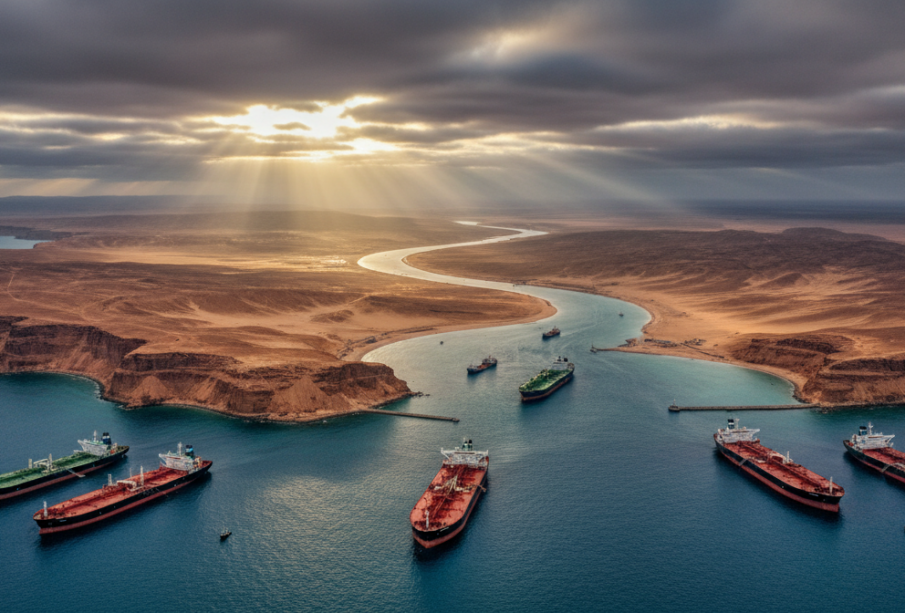
A narrow waterway just 21 miles wide has become the epicenter of a global economic nightmare, as the Iran conflict effectively shuts down one-fifth of the world’s oil supply.
Picture this: a shipping lane barely 2 miles wide in each direction, squeezed between Iran and Oman, carrying about 20 million barrels of oil every single day. That’s the Strait of Hormuz – and right now, it’s essentially closed for business.
The crisis erupted on February 28, 2026, when Trump and Israel launched what they called ‘Operation Epic Fury’ against Iran. The joint strikes, which reportedly killed Iran’s Supreme Leader Ali Khamenei, triggered swift retaliation from Tehran. Within hours, Iran’s Revolutionary Guard was broadcasting warnings to ships: ‘no vessel is allowed to pass the Strait of Hormuz.’
Technically, the strait isn’t formally blockaded. But here’s the thing about global shipping – when insurance companies start pulling coverage and major operators like Maersk and Hapag-Lloyd suspend operations, the practical effect is the same as a physical closure. Ship tracking data shows a 70% drop in traffic, with over 150 tankers now anchored in open waters, waiting for the all-clear that may not come.
The numbers are staggering. About 20-30% of global oil and gas supplies normally flow through this narrow chokepoint. That’s roughly $500 billion worth of energy trade annually, all grinding to a halt. Oil prices have already spiked 10-13%, with analysts warning they could hit $100 per barrel or higher if the disruption continues.
What makes this crisis particularly brutal is the timing and geography. Major Gulf producers like Saudi Arabia and the UAE have spare capacity – about 3.5 million barrels per day between them – but much of it can’t reach global markets if the strait stays closed. Alternative pipeline routes exist, like Saudi Arabia’s East-West Pipeline, but they can’t handle the full volume that normally transits through Hormuz.
The ripple effects are already spreading far beyond energy markets. Container shipping giants have suspended operations, forcing cargo to take the long route around Africa’s Cape of Good Hope – adding weeks to transit times and driving up costs. War-risk insurance premiums have surged by 50%, making even attempted transits economically unviable for most operators.
For Asian economies, this is particularly painful. Countries like India and China, which rely heavily on Middle Eastern oil, are facing acute supply risks. India is already pivoting toward Russian crude, while China may abandon its recent efforts to moderate Russian oil imports.
The human cost is mounting too. At least three tankers have been struck near the strait, including one off Oman that was set ablaze. The conflict has expanded beyond Iran, with Hezbollah launching rockets from Lebanon and Iranian missiles targeting US bases across the Gulf region.
Trump has doubled down, warning Iran against continued retaliation and calling for regime change. But analysts warn that even a brief closure could trigger supply shocks across multiple commodity classes simultaneously. The longer this drags on, the more structural the economic damage becomes.
The irony isn’t lost on energy experts: Iran’s own economy depends heavily on oil exports through this same waterway. But with their leadership decapitated and facing an existential threat, Tehran appears willing to weaponize the strait regardless of the global consequences.
As one analyst put it, ‘Closure of the Strait of Hormuz would disrupt roughly a fifth of globally traded oil overnight – and prices wouldn’t just spike, they would gap violently upward on fear alone.’ The shock would reverberate through financial markets, fuel inflation, and push fragile economies toward recession within weeks.
For now, the world watches and waits, hoping diplomacy can defuse a crisis that threatens to reshape global energy markets for years to come. But with each passing day, the economic damage deepens, and the path back to normal shipping becomes more uncertain.




We bring you daily news from around the world. From technology to lifestyle to design and music.