America’s Digital Rebellion: State Department Builds Portal to Bypass European Speech Laws
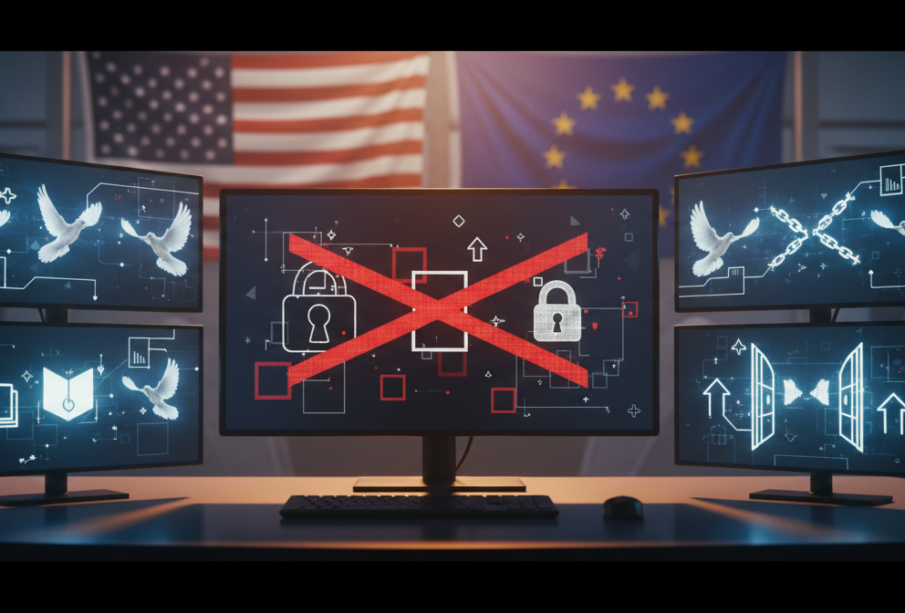
The U.S. State Department is developing freedom.gov, a controversial portal designed to help Europeans access content banned under EU hate speech laws, marking a dramatic escalation in transatlantic tensions over online free expression.
In the corridors of Washington, a quiet digital revolution is taking shape. The State Department is building what amounts to a direct challenge to European authority over online speech—a portal that would allow citizens across the Atlantic to access content their own governments have deemed too dangerous to see.
The project, housed at freedom.gov, represents something unprecedented in modern diplomacy: one democratic ally actively undermining another’s domestic content policies. Led by Undersecretary for Public Diplomacy Sarah Rogers, this initiative was originally slated for unveiling at last week’s Munich Security Conference, but internal concerns within the State Department forced a delay.
What makes this particularly striking is the target. This isn’t about helping dissidents in authoritarian regimes access blocked news sites. Instead, the portal aims to circumvent European restrictions on hate speech, terrorist propaganda, and other content regulated under the EU‘s Digital Services Act and Britain‘s Online Safety Act.
The site currently displays little more than an animation of Paul Revere on horseback above the words ‘Freedom is Coming,’ along with the tagline ‘Information is power. Reclaim your human right to free expression.’ But behind this Revolutionary War imagery lies a sophisticated technical operation that could include built-in VPN functionality, making user traffic appear to originate from American soil.
This digital end-run around European law reflects a fundamental philosophical divide that has been brewing for years. Where European regulators see necessary guardrails against the kind of hate speech that historically led to genocide, American officials increasingly view these restrictions as an existential threat to free expression itself.
The timing is hardly coincidental. Rogers, who took office in October 2025, has made combating what she calls ‘foreign censorship’ a cornerstone of her tenure. In December, she recorded a viral video from a European hotel room, deliberately reciting statements that had led to investigations or jail time in those regions—a provocative demonstration of the speech restrictions she opposes.
But the freedom.gov project raises uncomfortable questions about American intentions. Critics note that the content this portal would make accessible isn’t journalism or political dissent—it’s material that European democracies have collectively decided crosses the line into harmful territory. As one former internet freedom expert put it bluntly: ‘This is very specifically to help, like, an angry man in Schöndorf see neo-Nazi tweets from a guy in Arkansas.’
The European response has been measured but firm. European Commission spokesperson Thomas Regnier noted that the Commission doesn’t block websites directly—that’s left to national authorities. ‘If a website breaches EU law or international law, talking about sites which promote hate speech, for example, or have terrorist content, obviously that does not belong in Europe,’ he said.
What’s particularly ironic is how this initiative contrasts with the Trump administration’s broader approach to internet freedom. While building this European bypass, the administration has simultaneously gutted traditional internet freedom programs that helped activists in countries like Myanmar, Iran, and Cuba access blocked content. Those programs, which distributed over $500 million (approximately £400 million) over the past decade, issued no funding in 2025.
The technical architecture of freedom.gov also raises eyebrows among digital rights experts. Unlike the open-source, privacy-preserving tools that characterized previous American internet freedom efforts, this portal appears designed to funnel users through a centralized system controlled by a U.S. government agency. That’s a significant departure from the distributed, locally-developed technologies that formed the backbone of earlier circumvention efforts.
State Department officials have been careful to deny that freedom.gov represents a Europe-specific censorship circumvention program. ‘Digital freedom is a priority for the State Department, however, and that includes the proliferation of privacy and censorship-circumvention technologies like VPNs,’ a spokesperson told reporters. But the project’s focus and timing suggest otherwise.
The broader context makes this initiative even more provocative. European content moderation policies emerged from hard-learned historical lessons about how hate speech can metastasize into real-world violence. The DSA, which came into force in 2024, represents the EU’s attempt to balance free expression with public safety in the digital age.
Yet American officials increasingly frame these European policies as part of a broader assault on conservative voices online. The House Judiciary Committee released a report last year claiming the DSA was being used to censor political speech, including what it characterized as ‘anodyne political statements’ like ‘we need to take back our country.’
This transatlantic tension over digital governance reflects deeper philosophical differences about the role of government in regulating speech. The American tradition, rooted in resistance to colonial-era suppression, treats free expression as nearly absolute. The European approach, shaped by the horrors of the Second World War, views certain forms of speech as incompatible with democratic society.
The freedom.gov project forces these competing visions into direct conflict. If successful, it could establish a precedent for democratic allies actively undermining each other’s domestic policies—a development that would have been unthinkable just a few years ago.
For now, the portal remains more symbol than substance, displaying little beyond patriotic imagery and a login form. But its very existence signals a new phase in the global battle over who gets to decide what can be said online. In an era where information flows across borders instantly, the question of whose rules apply has become one of the defining challenges of digital diplomacy.
The stakes extend far beyond the technical details of content moderation. At its core, freedom.gov represents a test of whether democratic allies can maintain their partnership while holding fundamentally different views about the boundaries of acceptable speech. The answer may well determine the future of both internet freedom and the transatlantic alliance itself.






We bring you daily news from around the world. From technology to lifestyle to design and music.