iPhone’s Emergency SOS Feature Saves Six Lives in California’s Deadliest Avalanche
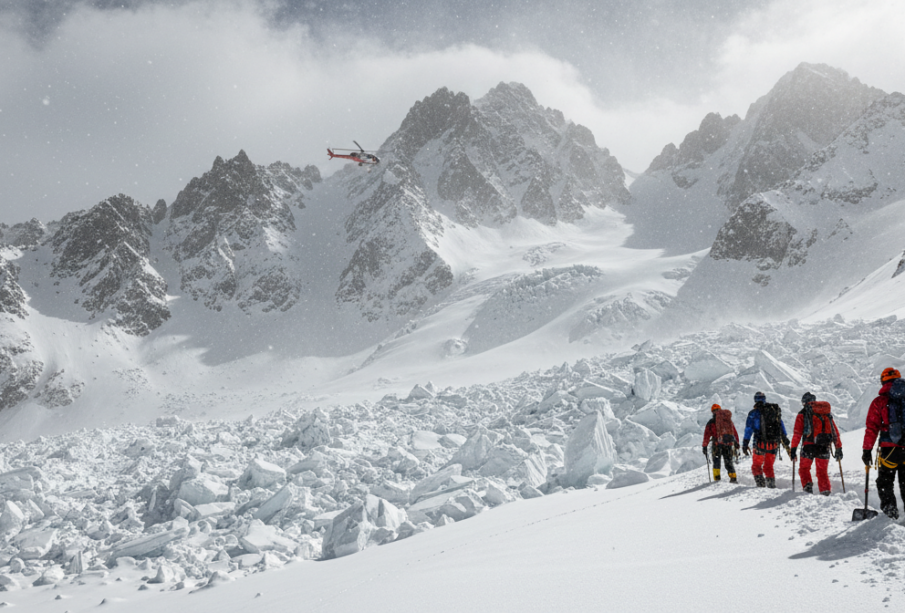
Six skiers survived California’s deadliest avalanche in nearly 50 years by using iPhone’s satellite emergency messaging to communicate with rescuers for four hours during a blizzard near Lake Tahoe.
Technology Becomes Lifeline in Mountain Disaster
When an avalanche the size of a football field swept through the Sierra Nevada mountains near Lake Tahoe on Tuesday morning, 15 backcountry skiers found themselves in a life-or-death situation. Eight would not survive. But for six others, a piece of technology in their pockets became the difference between rescue and tragedy.
The survivors used Apple’s Emergency SOS via satellite feature on their iPhones to maintain contact with emergency responders for roughly four hours while trapped in blizzard conditions. The feature, which allows users to send text messages to emergency services even without cellular coverage, proved crucial in coordinating the rescue effort in one of the most remote areas of the Western United States.
Four Hours of Critical Communication
Don O’Keefe, law enforcement chief for California’s Office of Emergency Services, described the sustained communication that made the rescue possible. ‘One of my personnel was communicating with one of the guides over a four-hour period, giving information back to the Nevada County sheriff’s office and coordinating what rescues could be permitted,’ he told reporters.
The avalanche struck around 11:30 a.m. Tuesday near Castle Peak, about 9,110 feet above sea level. The group, led by Blackbird Mountain Guides, was returning from a three-day backcountry skiing expedition when the massive snow slide hit. Survivors described a harrowing scene as they searched for missing companions while waiting six hours for help to arrive in dangerous conditions.
Two of the rescued skiers required medical attention for non-life-threatening injuries, while the others sheltered under a tarp as directed by emergency responders. The group also used avalanche beacons – radio devices that help rescuers locate buried skiers – but the iPhone’s satellite capability provided the two-way communication essential for coordinating the complex rescue operation.
How the Emergency Technology Works
Apple introduced Emergency SOS via satellite with the iPhone 14 lineup in September 2022, making it the first major smartphone manufacturer to offer consumer satellite emergency messaging at scale in the United States. The feature works on iPhone 14 and later models running iOS 16.1 or newer.
When users attempt to call emergency services but have no cellular or Wi-Fi coverage, the phone automatically offers satellite texting as an option. Users must be outside with a clear view of the sky and horizon for the connection to work. The system guides users through positioning their device to connect with low-Earth orbit satellites, which circle the planet at much lower altitudes than traditional communication satellites.
The service comes free for two years after activating a compatible iPhone, though Apple hasn’t announced long-term pricing. Google has since introduced similar capabilities on certain Pixel 9 models and all Pixel 10 devices.
Deadliest Avalanche in Decades
Tuesday’s avalanche became the deadliest in the United States since 1981, when 11 climbers died on Mount Rainier in Washington state. The incident also marked the second fatal avalanche near Castle Peak this year, following a snowmobiler’s death in January.
The Sierra Avalanche Center had issued warnings about dangerous conditions before the tragedy, citing heavy snowfall and gale-force winds that left the snowpack unstable. Up to 30 inches of snow had fallen in the previous 24 hours, with another storm system approaching. Officials classified the slide as a D2.5 avalanche – powerful enough to bury multiple people but not quite large enough to destroy buildings.
Among the victims were members of the Sugar Bowl Academy, an elite ski school in Placer County, and several women from Mill Valley, a small city north of San Francisco. The area near Donner Summit, where the expedition took place, receives an average of nearly 35 feet of snow annually and ranks among the snowiest places in the Western Hemisphere.
Growing Role of Satellite Safety Technology
The successful rescue highlights the expanding role of satellite communication in emergency situations. This wasn’t the first time Apple’s Emergency SOS feature has aided in rescues – the technology has previously helped save stranded hikers in Oregon and Colorado, as well as people involved in car crashes.
Industry experts predict satellite messaging will become standard on mid-range smartphones by 2026, making the life-saving technology more accessible. The United States averages 27 avalanche deaths annually, according to the Colorado Avalanche Information Center, with mountain regions like the Sierra Nevada frequently lacking reliable cellular coverage.
As recovery efforts continue for the remaining victim still missing on the mountain, the tragedy serves as both a reminder of nature’s power and a testament to how technology can provide critical communication when traditional networks fail. For the six survivors, a feature many iPhone users might never notice became their lifeline in the wilderness.






We bring you daily news from around the world. From technology to lifestyle to design and music.