A shipping titan ousted over Epstein ties, Bitcoin in freefall, gold smashing records, the dollar at a four-year low, and a $500 billion Saudi megacity quietly falling apart. Welcome to the global economy in February 2026.
If you wanted a single snapshot of just how chaotic the global economy feels right now, the past few weeks have delivered it in spades. We’re watching seismic shifts across markets, currencies, and corporate boardrooms, all happening simultaneously, all feeding off each other in ways that feel almost cinematic. It’s a lot. Let’s unpack it.
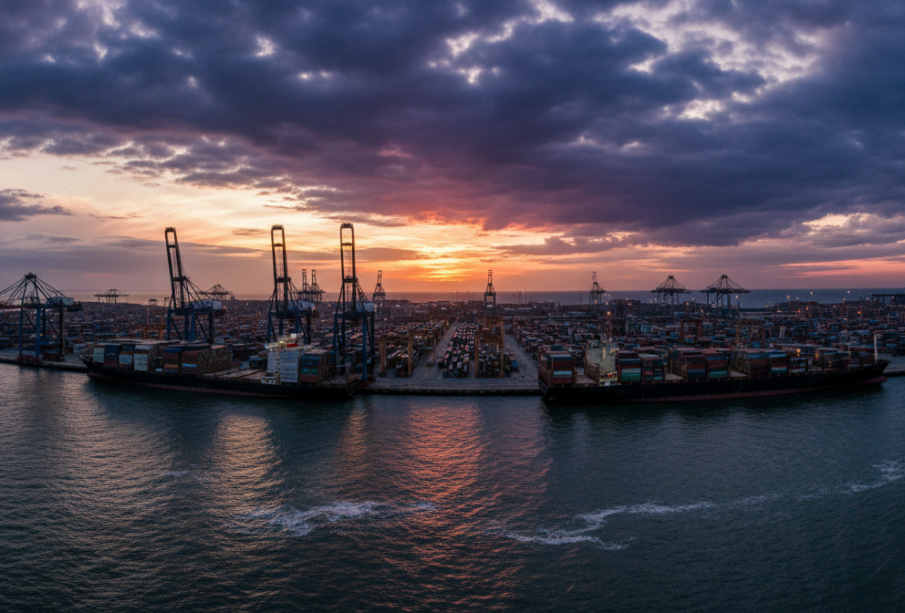
Sultan Ahmed bin Sulayem was, until last Friday, one of the most powerful businessmen in the Middle East. As chairman and CEO of DP World, he oversaw a logistics empire that handles roughly 10% of the world’s container trade, with operations in more than 80 countries. Then the Epstein files dropped, and everything unraveled. The U.S. Department of Justice released documents showing that bin Sulayem had maintained a years-long relationship with convicted sex offender Jeffrey Epstein, including exchanges that continued well after Epstein’s 2008 conviction. The emails weren’t just business talk. They included intimate messages, discussions about visits to Epstein’s private island, and one particularly disturbing 2019 message in which Epstein wrote ‘I loved the torture video.’ Bin Sulayem has not been accused of any criminal wrongdoing. But the pressure was swift and brutal.
Two major investment partners, Canada’s La Caisse pension fund and Britain’s International Investment, paused all new deals with DP World. Within days, bin Sulayem resigned ‘effective immediately.’ The company named Yuvraj Narayan as the new CEO and Essa Kazim as chairman. His departure follows a similar exit by Goldman Sachs top lawyer Kathy Ruemmler and the resignation of Paul Weiss chairman Brad Karp, both linked to the Epstein fallout. The message is clear: the Epstein files are still claiming careers, and the ripple effects are reaching corners of the global economy that most people never think about.
Meanwhile, if you bought Bitcoin because Donald Trump promised a crypto ‘Golden Age,’ you’re probably not feeling great right now. The world’s most popular cryptocurrency has been in freefall for months. It peaked above $127,000 back in October 2025, then started sliding. By early February 2026, it had crashed below $60,000, erasing every single dollar of gains since Trump’s re-election in November 2024. On one particularly brutal Thursday, it plunged 13% in a single day, its worst daily drop since the FTX collapse in 2022.
The reasons are layered. Trump’s tariff threats spooked global markets. Leveraged traders got wiped out. ETF outflows have been massive, with billions of dollars fleeing spot Bitcoin funds since October. And then there’s the awkward elephant in the room: reports that a wallet associated with the Trump family business sold millions of dollars’ worth of crypto right as prices were tanking. Crypto influencers who once championed Trump are now openly expressing regret. One wrote that Trump ‘was bad for crypto. Big mistake to have him as president.’ The industry-friendly legislation that was supposed to usher in a new era? It’s stalled in the Senate, partly because Democrats refuse to pass it without limits on the Trump family’s own crypto ventures.
But here’s the twist that makes this moment so strange: while Bitcoin crashes, gold is going absolutely parabolic. On January 26, gold blew past $5,000 per ounce for the first time in history, hitting $5,104. Silver joined the party, breaking above $100 per ounce, also a first. To put that in perspective, gold was sitting at around $2,500 just a year and a half ago. Silver started 2025 at roughly $29. The gains are staggering.
What’s driving it? The usual suspects, amplified to eleven. Geopolitical chaos, from Trump’s Greenland threats to NATO friction. Central banks around the world hoarding gold like it’s going out of style. A persistent supply deficit in silver that’s been building for five straight years. And a growing sense among investors that the U.S. dollar just isn’t the safe bet it used to be. J.P. Morgan raised its year-end gold target to $6,300 per ounce. Some analysts are whispering about $8,000 or even $9,000 before 2026 is over. Whether those numbers materialize or not, the direction of travel is unmistakable.
Speaking of the dollar, it’s having a rough time too. The U.S. Dollar Index fell below 96 in late January, its lowest level since February 2022. Over the past 12 months, the greenback has lost nearly 11% of its value. The culprits read like a greatest-hits album of economic anxiety: erratic tariff policy, pressure on the Federal Reserve to cut rates, ballooning national debt approaching $38.5 trillion, and a growing global trend of de-dollarization. When Trump was asked in Iowa whether the dollar had fallen too far, he shrugged it off. ‘No, I think it’s great,’ he said. The dollar promptly dropped another percent. Morgan Stanley projects the index could fall to 94 by mid-2026 before potentially recovering later in the year. For American consumers, a weaker dollar means pricier imports and more expensive vacations abroad. For exporters, it’s a gift.
And then there’s NEOM, the Saudi megaproject that was supposed to redefine what a city could be. Crown Prince Mohammed bin Salman’s vision for The Line, a 105-mile mirrored skyscraper stretching through the desert to house 9 million people, is quietly being dismantled. The original $500 billion price tag has reportedly ballooned into the trillions. The workforce has been cut by roughly 35%. The 2029 Asian Winter Games, which were supposed to be held at NEOM’s Trojena ski resort, have been indefinitely postponed. Oil prices hovering around $55 per barrel, well below the $96 Saudi Arabia needs to balance its budget, have forced a painful reckoning. Instead of a mirrored Manhattan in the desert, architects are now reportedly redesigning The Line as a hub for AI data centers, leveraging its coastal location for seawater cooling. It’s a far cry from flying taxis and robot butlers, but it might actually be buildable.
Zoom out, and what you see is a global economy in the grip of overlapping disruptions. The old certainties, the dollar’s dominance, crypto’s unstoppable rise, the idea that enough money can will any vision into existence, are all being stress-tested at once. Markets are repricing risk in real time. Careers built over decades are ending in a single news cycle. And investors are scrambling to figure out what’s actually safe anymore, which might explain why they’re buying gold like it’s 1979 all over again. Whatever happens next, February 2026 is going to be one for the textbooks.






We bring you daily news from around the world. From technology to lifestyle to design and music.