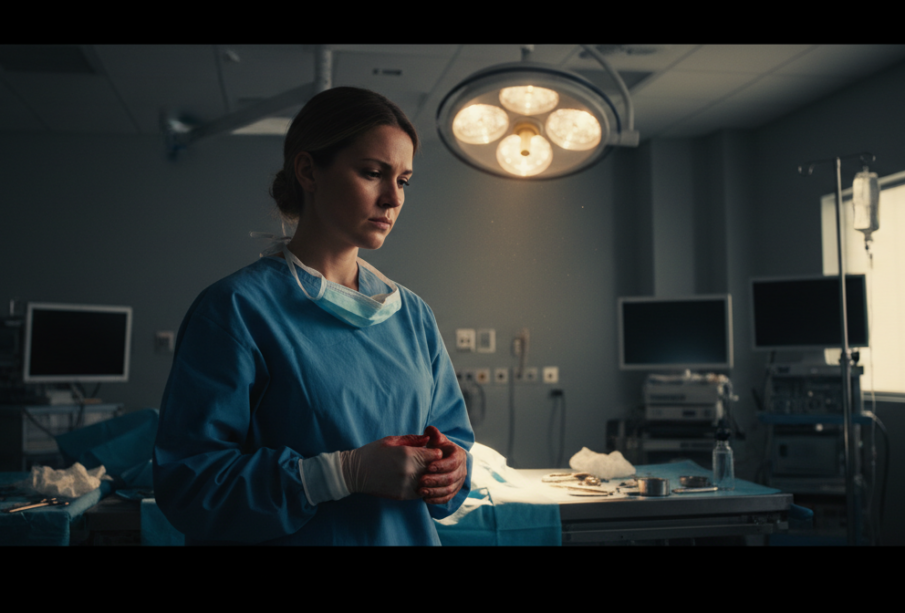
On March 22, 2017, trauma surgeon Shehan Hettiaratchy faced one of London’s darkest hours. His response to the Westminster Bridge attack reveals the delicate balance between clinical detachment and human compassion that defines modern emergency medicine.
The Call That Changes Everything
The phone buzzed at the worst possible moment. Shehan Hettiaratchy was in the middle of conducting end-of-term medical exams when the alert came through: terrorist attack near the Houses of Parliament. Within minutes, the veteran trauma surgeon was racing through London toward St Mary’s hospital near Paddington, where he serves as lead surgeon.
The date was March 22, 2017, and Khalid Masood, a 52-year-old British citizen, had just driven a rented Hyundai Tucson at speeds up to 76 mph into pedestrians on Westminster Bridge. The attack killed five people and injured more than 50 others. For Hettiaratchy, this wasn’t just another busy Saturday night in the trauma ward – this was something that would test every principle he’d learned about balancing clinical precision with human empathy.
The Surgeon’s Paradox
As documented in the BBC series Hospital, Hettiaratchy found himself managing a crisis that demanded both methodical thinking and emotional resilience. ‘This is patient A, patient B, patient C; what are the injuries, what needs to happen, what needs to go on?’ he recalls thinking that day. The clinical detachment was necessary – it’s what allows surgeons to function under extreme pressure.
But Hettiaratchy, who has since written about his experiences in his memoir ‘The Careful Surgeon,’ believes this detachment must have limits. ‘The most important thing I tell my medical students is that they should stay horrified by what they see – they need to stay shocked,’ he explains. Complete emotional disconnection, he argues, strips away the humanity that makes good medicine possible.
That evening, after treating 15 victims including the perpetrator himself, Hettiaratchy felt what he describes as a ‘gut punch’ of emotions. Among his patients was Stephen, a man celebrating his 40th birthday with his wife Cara when Masood’s car struck them. Stephen required a four-hour operation to repair damage to his leg, skull, and chest.
A Career Forged in Crisis
Hettiaratchy’s attraction to ‘life and death situations’ began early. Growing up in Hampshire with psychiatrist parents, he narrowed his career choices to military service or medicine. Characteristically, he chose both – joining the army for a year before medical school, then later serving as an army doctor in Afghanistan.
This dual path has shaped his approach to trauma surgery. As Major Trauma Director at one of London’s busiest trauma centers and national clinical director of armed forces healthcare, he’s treated victims of the Grenfell Tower fire, worked with UK-Med on surgical missions in Ukraine and Gaza, and served in conflict zones from Kosovo to Haiti after the earthquake.
‘I’m not sure what I was trying to prove by entering war zones,’ he admits. ‘But it felt like something I needed to do for me.’ He acknowledges that ego plays a role – perhaps necessarily so. ‘You couldn’t walk into an operating theatre, take a knife in your hand and cut someone open’ without a certain confidence, he notes.
The Human Cost of Healing
The Westminster attack’s aftermath highlighted a crucial aspect of Hettiaratchy’s philosophy: the importance of supporting healthcare workers emotionally. At a ‘reflective pause’ event funded by Imperial Health Charity, staff reunited with survivors like the Lockwoods to process the trauma in a supportive environment.
‘We’ve got really dedicated staff here who work really hard for our patients,’ Hettiaratchy explains. But events like Westminster can push even experienced professionals to their limits. One colleague told him after the Grenfell Tower fire: ‘I’m getting towards the end of what I can cope with.’
This recognition of human limits extends to his teaching. In his memoir, published in January 2022, Hettiaratchy writes about finding light in the darkest moments – often through his patients’ resilience. ‘The light will always outshine the dark,’ he believes, a philosophy tested repeatedly in London’s trauma wards.
For Hettiaratchy, the challenge isn’t just technical skill – it’s maintaining the emotional connection that makes healing possible while developing the detachment necessary to save lives. It’s a balance that defines not just his career, but the very essence of modern emergency medicine in an age of increasing violence and uncertainty.

Leave a reply



We bring you daily news from around the world. From technology to lifestyle to design and music.