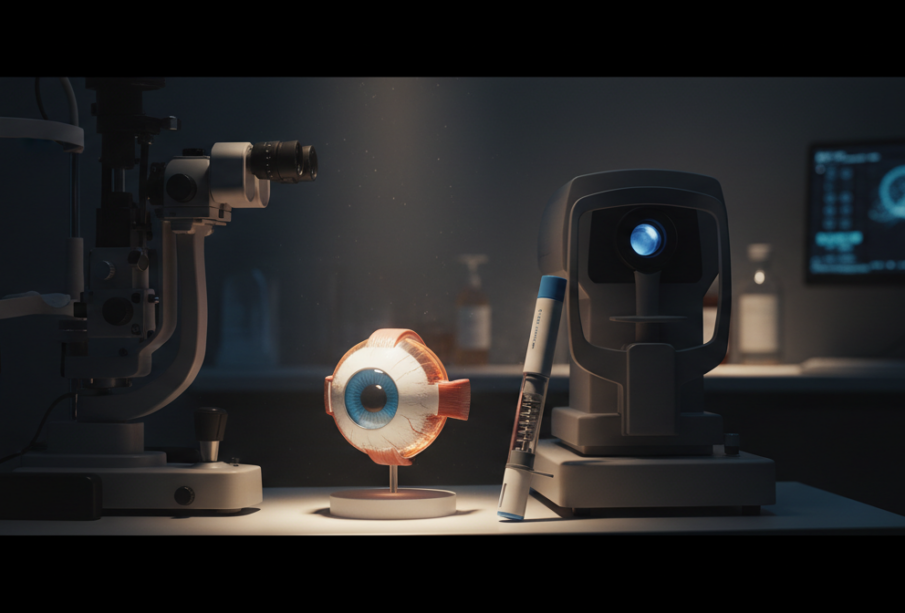
New research reveals that Wegovy carries nearly five times the risk of sudden vision loss compared to Ozempic, with men facing particularly elevated dangers from this rare but serious side effect.
The weight loss revolution sparked by Novo Nordisk’s blockbuster drugs has taken an unexpected turn. Fresh analysis of adverse event reports submitted to the FDA between 2017 and 2024 shows that Wegovy, the higher-dose version of semaglutide approved for obesity treatment, carries the steepest risk of ischemic optic neuropathy among similar medications.
This condition, often called an ‘eye stroke,’ occurs when blood flow to the optic nerve becomes restricted, potentially causing permanent vision loss. The findings, published in the British Journal of Ophthalmology, paint a troubling picture of dose-dependent risks that researchers say demand urgent attention.
Despite generating about seven times fewer reports than Ozempic due to its later market entry in 2021, Wegovy showed the strongest association with vision problems. The drug logged 28 reports of ischemic optic neuropathy with odds nearly 75 times higher than baseline, far exceeding Ozempic’s 47 reports at 19 times higher odds.
The gender divide proves particularly stark. Men taking Wegovy face 116 times greater odds of developing this eye condition, while women on Ozempic show nearly 27 times higher risk. Overall, the analysis found men are more than three times as likely as women to experience this complication.
Dr. Edward Margolin, a neuro-ophthalmologist at the University of Toronto who has extensively studied optic nerve disorders, emphasizes that patients shouldn’t panic over these findings. ‘Weight loss is a very individual thing and should be done thoughtfully under the guidance of a physician,’ he explains. ‘Losing weight rapidly and losing a lot of weight is hard on a body.’
The research team found no reports of ischemic optic neuropathy linked to Rybelsus, the tablet form of semaglutide used for diabetes. This absence suggests that delivery method and dosage play crucial roles in risk development. Injectable forms deliver higher concentrations more rapidly than tablets, which are absorbed slowly with fewer blood sugar spikes.
Interestingly, Mounjaro and Zepbound, which contain the different active ingredient tirzepatide, showed no significant association with vision problems. This finding points to semaglutide-specific mechanisms rather than broader GLP-1 class effects.
The timing couldn’t be more critical. These medications have exploded in popularity, with an estimated 2-3% of the US population receiving prescriptions in 2023 alone. The drugs’ remarkable effectiveness in treating obesity and diabetes has created unprecedented demand, but the vision risks add a sobering dimension to the risk-benefit calculation.
Earlier research from Massachusetts Eye and Ear, published in JAMA Ophthalmology last July, first raised red flags about semaglutide and vision loss. That study found diabetes patients on semaglutide were four times more likely to develop nonarteritic anterior ischemic optic neuropathy, while those using it for weight loss faced seven times higher risk.
Dr. Joseph Rizzo, who led that initial research, describes the condition as ‘a stroke of the optic nerve.’ Unlike typical strokes that block major arteries, this affects the intricate network of tiny vessels feeding the optic nerve. The damage is permanent, and there’s currently no way for patients to protect themselves proactively.
The mechanism behind this association remains unclear, though researchers theorize that higher doses and rapid injection delivery might stress the delicate blood vessels around the optic nerve. The sympathetic nervous system activation caused by these medications could influence blood flow to this critical area.
For the millions already taking these drugs, the message from experts is measured caution rather than alarm. The absolute risk remains low given the vast number of users, and the benefits for diabetes and cardiovascular health often outweigh the vision concerns. However, doctors should inform patients about this potential complication, and anyone experiencing sudden vision changes should seek immediate medical attention.
As one commentary accompanying the research noted, these findings ‘highlight a potential dose-dependent safety concern that warrants urgent prospective evaluation to guide prescribing and regulatory policy.’ The FDA continues monitoring these reports while pharmaceutical companies conduct additional safety studies.
The weight loss drug boom has transformed millions of lives, offering hope for those struggling with obesity and its related health complications. But as this research demonstrates, even revolutionary medications carry risks that emerge only as real-world use expands. The challenge now lies in balancing these remarkable benefits against newly understood dangers, ensuring patients can make truly informed decisions about their health.




Leave a reply



We bring you daily news from around the world. From technology to lifestyle to design and music.