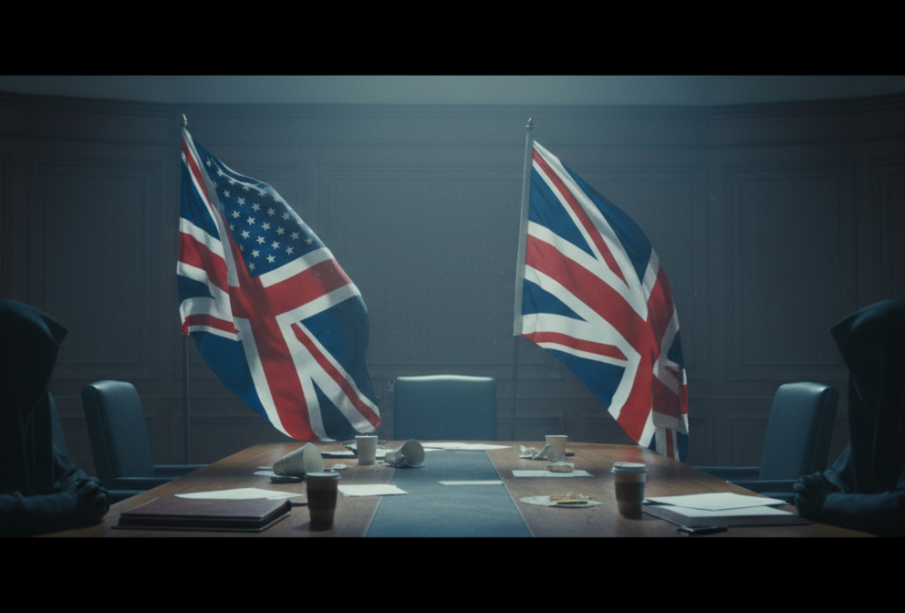
Donald Trump’s war with Iran has exposed deep cracks in the ‘special relationship’ between America and Britain, with Tony Blair’s ghost haunting every decision Keir Starmer makes.
The Churchill Comparison That Stung
Trump didn’t mince words when he compared Starmer to Britain’s wartime hero. ‘This is not Winston Churchill we are dealing with,’ the president told reporters in the Oval Office, his frustration palpable. The comment came after Britain’s prime minister initially refused to let American forces use UK military bases for strikes against Iran.
It’s the kind of diplomatic slap that would have made headlines in any era, but in March 2026, it feels particularly brutal. The US and Israel launched their joint military operation against Iran on February 28, and Starmer’s hesitation cost precious hours – at least according to Trump. ‘He ruins relationships. We are very surprised,’ the president added, making it clear this wasn’t just policy disagreement but personal disappointment.
Blair’s Ghost Returns to Haunt Labour
Just when you thought the Iraq War was finally behind British politics, Tony Blair decided to weigh in. Speaking at a private Jewish News event, the former prime minister delivered a stinging critique of Starmer’s cautious approach. ‘We should have backed America from the very beginning,’ Blair said, adding that when your ally is ‘an indispensable cornerstone for your security… you had better show up.’
The irony wasn’t lost on anyone. Here was the man who dragged Britain into Iraq alongside George W. Bush in 2003, now criticizing another Labour leader for being too careful about military commitments. John Miller, whose 21-year-old son Simon was killed in Iraq, called Blair’s intervention ‘a joke,’ saying he ‘should be in the Hague on war crimes.’
The backlash was swift and fierce. Labour MPs rallied around Starmer, with many pointing out that learning from Iraq’s mistakes was exactly what a responsible leader should do.
The Special Relationship Under Strain
The cracks in the US-UK alliance became visible when Starmer initially blocked American access to Diego Garcia, the joint military base in the Chagos Islands. Trump was particularly incensed about this, calling the UK’s decision to return sovereignty of the islands to Mauritius an ‘act of great stupidity.’
‘The United Kingdom, our once Great Ally, maybe the Greatest of them all,’ Trump posted on Truth Social, before delivering the killer blow: ‘We don’t need people that join Wars after we’ve already won!’ The message was clear – America’s patience with British hesitation had run out.
But Starmer eventually reversed course, allowing US forces to use RAF Fairford and other British bases for what he carefully termed ‘defensive operations.’ Foreign Secretary Yvette Cooper defended the decision, insisting that ‘the job of the British prime minister is to take decisions in the UK national interest, not in the interests of any other country.’
Public Opinion vs Political Pressure
The numbers tell a story Starmer knows all too well. A YouGov poll found that 49% of Britons oppose the US-Israeli strikes on Iran, with only 28% supporting them. Another survey showed 56% approved of Starmer’s initial decision to block US access to British bases.
Yet the political pressure came from all sides. Nigel Farage and Kemi Badenoch from the right attacked Starmer for indecision, while Zack Polanski from the Green Party accused him of ‘trying to play both sides and still losing.’ Even Jeremy Corbyn, now an independent MP, weighed in, saying Starmer was ‘echoing Tony Blair’s obedience to Washington.’
The war has already claimed over 1,300 lives in Iran and seven American service members, with retaliatory strikes hitting targets across the Middle East. British bases in Cyprus have been targeted by Iranian drones, making the conflict feel uncomfortably close to home.
Learning From History’s Mistakes
‘We all remember the mistakes of Iraq, and we have learned those lessons,’ Starmer told Parliament, drawing a clear line between his approach and Blair’s 2003 decision. The Chilcot Inquiry into the Iraq War had been damning, criticizing the lack of legal basis and post-war planning.
This time, Starmer insisted, would be different. ‘This government does not believe in regime change from the skies,’ he declared, even as Trump made clear that toppling Iran’s government was exactly what he had in mind. The British position remained focused on defensive operations and protecting UK nationals in the region.
But critics argue that allowing US bombers to use British bases makes the UK complicit regardless of the semantic distinctions. As Labour MP Barry Gardiner pointed out in Parliament, ‘a defensive strike is a contradiction in terms… in any language, a pre-emptive strike is an attack.’
The ghost of Iraq continues to haunt British foreign policy, with every decision measured against the catastrophic consequences of that earlier conflict. Whether Starmer can navigate between American pressure and British skepticism while maintaining the ‘special relationship’ remains to be seen. But one thing is clear – the easy days of automatic Anglo-American cooperation are over.


Leave a reply


We bring you daily news from around the world. From technology to lifestyle to design and music.