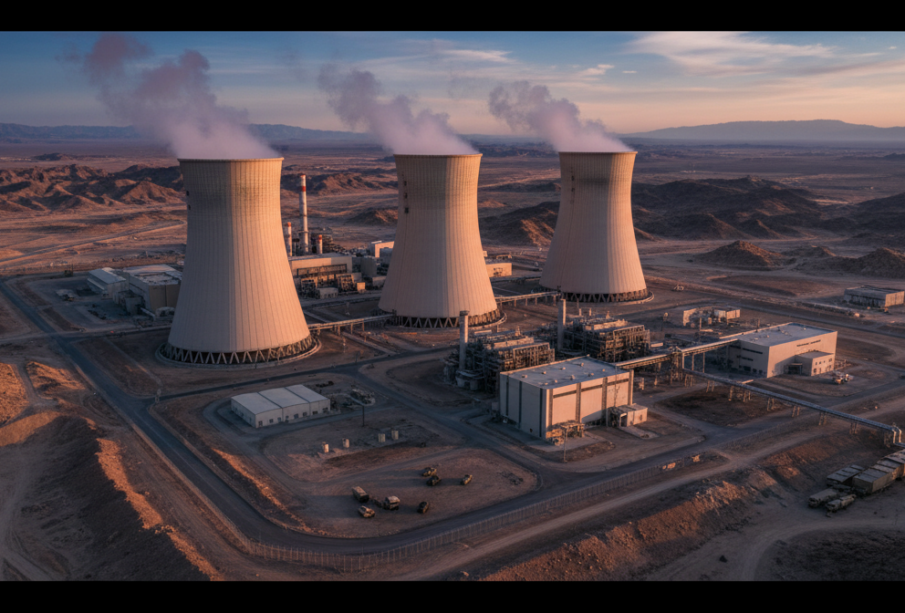
Ten years after the Joint Comprehensive Plan of Action promised to contain Iran’s nuclear ambitions, the landmark agreement lies in ruins following military strikes and diplomatic breakdown.
A Deal Born of Necessity
Back in 2015, when Obama was still in the White House and oil was trading at $50 a barrel, the world’s major powers thought they had cracked the code on Iran’s nuclear program. The Joint Comprehensive Plan of Action (JCPOA) – or Iran nuclear deal as it became known – was supposed to be the diplomatic triumph of the decade.
The math seemed simple enough. Iran would cap its uranium enrichment at 3.67 percent, far below the 90 percent needed for weapons-grade material. In exchange, crippling international sanctions would be lifted, potentially unlocking $100 billion (roughly $2.3 trillion in Iranian rial) in frozen assets. The deal gave international inspectors unprecedented access to Iranian facilities and extended Iran’s ‘breakout time’ – the period needed to produce enough fissile material for a bomb – to at least one year.
For a brief moment, it looked like economic incentives might triumph over geopolitical tensions. European companies began eyeing Iranian markets, oil prices softened, and diplomats congratulated themselves on averting another Middle East crisis.
The Unraveling Begins
But like so many Wall Street deals that look bulletproof on paper, the JCPOA contained fatal flaws that became apparent only with time. Trump’s 2018 withdrawal from the agreement marked the beginning of the end, though the cracks had been showing for months.
‘The heart of the Iran deal was a giant fiction,’ Trump declared, echoing criticisms that the agreement merely delayed rather than prevented Iran’s nuclear ambitions. The reimposition of U.S. sanctions effectively neutered the deal’s economic benefits, cutting Iran off from international financial systems and rendering the nuclear agreement’s incentive structure meaningless.
Iran’s response was predictable to anyone who understood the regime’s psychology. By May 2019, Tehran began systematically violating the agreement’s terms. Uranium stockpiles that were supposed to remain at 300 kilograms (660 pounds) ballooned to 30 times that limit. Enrichment levels crept upward from the permitted 3.67 percent to 60 percent – a stone’s throw from weapons-grade material.
The Point of No Return
The numbers tell the story of a deal in free fall. By March 2025, Iran possessed over 400 kilograms (880 pounds) of uranium enriched to 60 percent purity – enough theoretical material for multiple nuclear weapons if further enriched. Intelligence assessments suggested Iran’s breakout time had shrunk from one year under the JCPOA to potentially just weeks.
This is where the financial analogy breaks down. Unlike a corporate bankruptcy where creditors can negotiate a workout, nuclear proliferation admits no half-measures. When Netanyahu’s government concluded that diplomacy had failed, military action became inevitable.
The June 2025 strikes by Israel and the United States on Iranian nuclear facilities marked the definitive end of the JCPOA era. Operation Midnight Hammer, as the U.S. component was codenamed, targeted the Fordow, Natanz, and Isfahan facilities with bunker-busting bombs and Tomahawk missiles.
Counting the Cost
The aftermath reads like a case study in diplomatic failure. Over 1,000 Iranians died in the 12-day conflict that followed the strikes. Iran suspended all cooperation with the International Atomic Energy Agency and began moving nuclear materials to undisclosed locations. The ‘snapback’ sanctions mechanism – the JCPOA’s supposed insurance policy – was triggered in September 2025, reimposing all previous UN sanctions.
On October 18, 2025 – exactly ten years after the deal’s adoption – Iran officially terminated the agreement. The timing was symbolic, marking what was supposed to be ‘Termination Day’ under the original JCPOA timeline, when many restrictions would have naturally expired.
Today, as Trump launches what he calls ‘Operation Epic Fury’ aimed at regime change in Iran, the nuclear question remains unresolved. Intelligence agencies assess that Iran retains the industrial capacity to resume enrichment activities, potentially within months of rebuilding damaged facilities.
Lessons from a Failed Gamble
The JCPOA’s collapse offers sobering lessons about the limits of economic diplomacy when dealing with existential security concerns. Like many financial instruments that work in theory but fail in practice, the deal’s fundamental assumption – that economic incentives could permanently alter Iran’s strategic calculus – proved fatally flawed.
The agreement’s supporters argue it bought valuable time and provided unprecedented transparency into Iran’s nuclear program. Critics contend it merely legitimized Iran’s enrichment capabilities while providing sanctions relief that strengthened the regime.
What’s indisputable is the cost of failure. The Middle East today is more unstable than it was in 2015, Iran is closer to nuclear weapons capability than ever before, and the prospect of a negotiated solution appears more remote with each passing day. In the unforgiving arithmetic of nuclear proliferation, the JCPOA will be remembered not for what it achieved, but for what it failed to prevent.



Leave a reply



We bring you daily news from around the world. From technology to lifestyle to design and music.