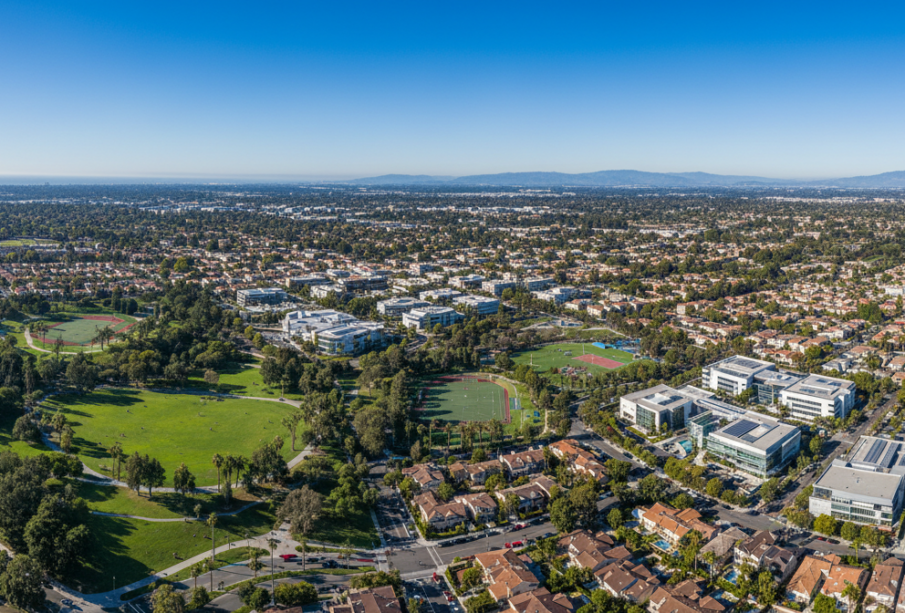
In an era when American cities grapple with division and decline, one California community has cracked the code on contentment. Fremont’s seventh consecutive year atop the nation’s happiness rankings isn’t just about statistics—it’s about what happens when a diverse community decides to invest in itself.
The morning rush at Country Way Diner tells you everything you need to know about Fremont. Three generations crowd around the same tables they’ve occupied for decades, sharing plates of French toast that blur the line between pancakes and tradition. The waitress knows everyone’s order by heart. This is what happiness looks like when it’s measured not in surveys, but in the simple act of showing up for each other.
For the seventh year running, this California city of 230,000 has claimed the top spot in WalletHub‘s annual happiness rankings. While other communities chase fleeting trends or grapple with growing pains, Fremont has quietly perfected something more elusive: the art of making people want to stay.
‘Fremont’s recognition as the happiest city in America once again is an honor, and I believe it reflects the strength of our community,’ Mayor Raj Salwan told reporters after the latest rankings were released. But his next words carried more weight: ‘Rankings are not the finish line.’
It’s a telling statement from a man who embodies his city’s immigrant success story. Salwan, who became Fremont‘s first Indian-American mayor in December 2024, grew up in a one-bedroom apartment at Harris Place, walking to Vallejo Mill Elementary. Today, he runs a successful veterinary practice and has spent 18 years in city government. His trajectory mirrors that of his adopted hometown—steady, purposeful, and rooted in the belief that good things happen when communities invest in themselves.
The numbers behind Fremont‘s happiness are striking. Nearly 80 percent of households earn above $75,000 annually—the income threshold researchers have identified as maximizing happiness. The city boasts the nation’s highest life satisfaction rates, the seventh-lowest depression rate, and the fifth-longest life expectancy. But perhaps most telling is its divorce rate: just 9.3 percent, the lowest in the country.
These aren’t accidents. They’re the result of deliberate choices made over decades. Fremont sits in the heart of Silicon Valley, home to over 900 advanced manufacturing companies and 1,200 tech and life science firms. Tesla, Seagate, and Meta all maintain significant operations here. But unlike other tech hubs that have priced out families, Fremont has managed to balance economic opportunity with livability.
The city’s 1,000-plus acres of parks provide breathing room in a region where open space commands premium prices. Average temperatures hover in the comfortable 60s and 70s Fahrenheit most of the year, with just 16.7 inches of annual rainfall and 264 sunny days. It’s the kind of climate that encourages outdoor gatherings and community connections—the social infrastructure that happiness researchers say matters more than individual wealth.
But Fremont‘s secret weapon might be its diversity. Nearly half of residents were born outside the United States, and 63 percent speak a language other than English at home. In many communities, such demographics might create tension. Here, they’ve created resilience. When you’ve traveled halfway around the world to build a better life, you tend to appreciate what you’ve found.
Salwan understands this intimately. His parents arrived with little, his mother working at McDonald’s, his father as a night security guard. ‘I remember feeling poor, feeling that we didn’t have everything,’ he recalled at a recent fundraiser. ‘This community has taken us in, has given us so much, and we feel so blessed and fortunate to live in this community.’
That gratitude translates into civic engagement. Fremont residents don’t just live here; they participate. They serve on commissions, attend city council meetings, and volunteer for local causes. When Salwan first joined the Human Relations Commission in 2005, he was ‘hooked’ by the possibility of making a difference. It’s a sentiment shared by thousands of his neighbors.
Yet Salwan is quick to acknowledge that happiness rankings don’t solve everything. ‘There is still more to do to make the city even better and even happier,’ he said, citing ongoing challenges with public safety, homelessness, housing affordability, and ensuring opportunity for all residents. It’s the kind of honest assessment that builds trust between government and governed.
The mayor’s pragmatism reflects a broader truth about Fremont‘s success. This isn’t a community that has stumbled into happiness through luck or geography. It’s one that has chosen to prioritize the conditions that research shows matter most: economic security, social connection, physical health, and civic engagement. The result is a place where three generations can share breakfast at the same diner table, where immigrants can rise to lead city hall, and where ‘rankings are not the finish line’ because the real work of building community never ends.
In an America increasingly defined by division and displacement, Fremont offers something rarer than happiness rankings: proof that diverse communities can thrive when they decide to invest in each other. Seven years at the top isn’t just a statistical achievement—it’s a reminder that the American dream still works when communities make it work.




Leave a reply



We bring you daily news from around the world. From technology to lifestyle to design and music.