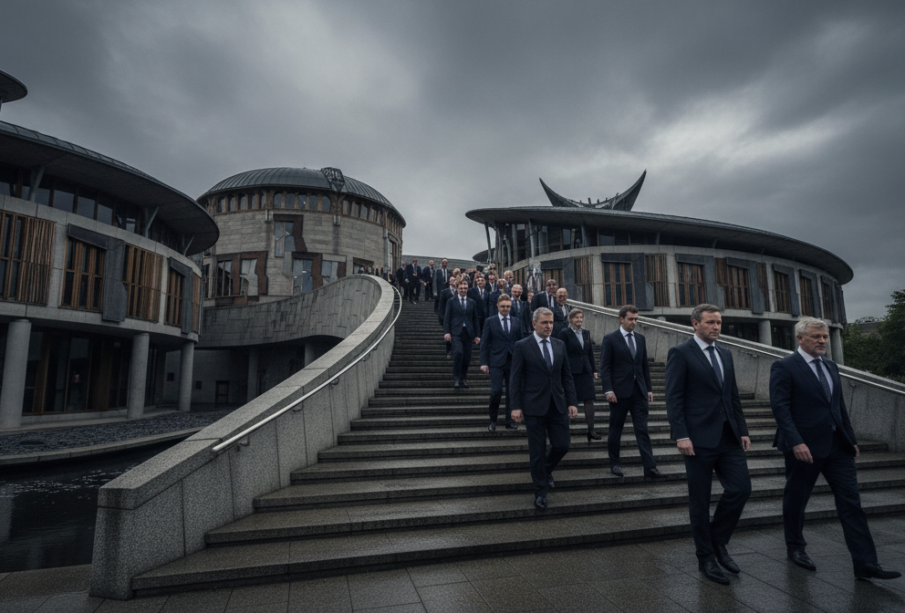
With just days until the historic March 17 vote, Scotland’s controversial assisted dying legislation faces an uncertain future as MSPs grapple with constitutional complexities and wavering support.
A Parliamentary Cliffhanger
The corridors of Holyrood are buzzing with tension as Scotland prepares for one of its most consequential legislative votes in years. On March 17, Members of the Scottish Parliament will cast their final ballots on the Assisted Dying for Terminally Ill Adults (Scotland) Bill, a piece of legislation that could fundamentally change how terminally ill Scots face their final days.
The numbers tell a stark story. What once seemed like a foregone conclusion has transformed into a nail-biting finish. During the first day of Stage 3 debates, an overwhelming 86% of MSPs who spoke took positions against the bill. That’s eighteen lawmakers voicing opposition for every three in support – a six-to-one ratio that would have been unthinkable when the bill first passed its general principles vote by 70 to 56 last May.
The arithmetic is brutal for supporters. If just seven more MSPs switch from yes to no, Liam McArthur’s groundbreaking legislation will crash and burn. Three have already publicly jumped ship, including Russell Findlay, the Scottish Conservative leader who told the Scottish Daily Mail he could no longer support the bill despite agreeing with its ‘general principle.’
Constitutional Quicksand
Behind the shifting vote counts lies a more complex constitutional drama that has left even seasoned parliamentary observers scratching their heads. The bill has stumbled into the murky waters of devolved versus reserved powers – that eternal Scottish political minefield where Edinburgh and Westminster clash over who controls what.
The crux of the problem centers on employment protections for NHS staff who conscientiously object to participating in assisted dying. These safeguards were originally baked into the legislation, but the Scottish government determined they fall outside Holyrood’s constitutional authority. The solution? Remove them from the bill and hope Westminster will restore them later through something called a Section 104 order.
First Minister John Swinney didn’t mince words when he waded into the debate, declaring that McArthur had introduced a bill that ‘did not recognise’ the constitutional constraints his government had repeatedly flagged. The Orkney MSP pushed back, insisting he had ‘always acknowledged’ the reserved elements and that both governments had ‘worked at pace’ to resolve the issues.
Medical Professionals in Revolt
The constitutional gymnastics have triggered a revolt among Scotland’s medical establishment. Six major medical organizations, including the Association for Palliative Medicine (Scotland) and the Royal College of Physicians and Surgeons of Glasgow, fired off a joint letter warning that removing conscience protections from primary legislation would damage transparency and leave doctors vulnerable.
One Glasgow consultant, speaking anonymously, captured the frustration: ‘We’re being asked to implement a law that could force us to choose between our professional ethics and our jobs. This isn’t compassion, it’s coercion.’
The Royal College of Psychiatrists in Scotland went further, expressing concerns about ‘reputational and relational risks within clinical teams’ and warning that members ‘could face pressure from colleagues and employers’ without adequate legal backing. They described the plan to handle these protections through Westminster as ‘inadequate and inappropriate.’
Last-Ditch Efforts and Final Calculations
As the clock ticks toward Tuesday’s vote, both sides are pulling out all the stops. A cross-party group of MSPs staged a dramatic photo opportunity outside the Scottish Parliament, holding pictures of deceased constituents while urging colleagues to ‘keep the voices and experiences of those most affected by this issue front of mind.’
McArthur himself has been working the corridors with characteristic determination, joking about the ‘wild-eyed terror on the faces of colleagues’ when he approaches them in the coffee lounge. He’s described his legislation as now ‘bulletproof’ following the marathon four-day amendment process, claiming it represents ‘the toughest and most comprehensively safeguarded assisted dying bill in the world.’
But the numbers remain unforgiving. With over 300 amendments debated and MSPs sitting on a Friday for the first time in years, the legislative process has been exhaustive. Yet for all the parliamentary theater, the fundamental question remains unchanged: will enough MSPs be willing to take a leap of faith on legislation whose key protections depend on the goodwill of politicians 400 miles away in Westminster?
The answer will come Tuesday, in what promises to be one of the most watched votes in Holyrood’s 25-year history.


Leave a reply



We bring you daily news from around the world. From technology to lifestyle to design and music.