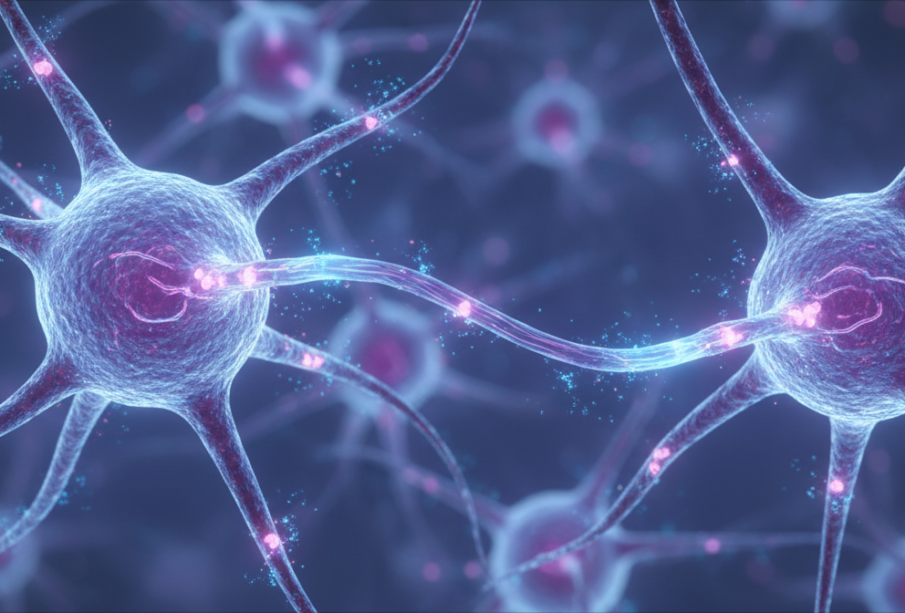
A groundbreaking study from Wellesley College provides the strongest evidence yet that consciousness may operate through quantum mechanics, potentially connecting our minds to the fabric of the universe itself.
Revolutionary Findings Challenge Traditional Neuroscience
The mystery of consciousness has puzzled scientists for decades, but new research from Wellesley College in Massachusetts may have cracked one of its fundamental codes. In a study published in the journal eNeuro in August 2024, neuroscience professor Mike Wiest and his team of undergraduate researchers made a discovery that could revolutionize our understanding of how consciousness works.
The experiment was elegantly simple yet profound in its implications. Researchers administered isoflurane, a common anesthetic gas, to laboratory rats while testing a crucial hypothesis about the physical basis of consciousness. One group of rats received an additional drug called epothilone B, which binds to and stabilizes microscopic structures called microtubules inside brain cells. The results were striking: rats with stabilized microtubules remained conscious significantly longer under anesthesia than those without the protective drug.
‘Since we don’t know of another way that anesthetic binding to microtubules would generally reduce brain activity and cause unconsciousness,’ Wiest explains, ‘this finding supports the quantum model of consciousness.’ The study represents the first concrete experimental evidence supporting a controversial theory that has divided the scientific community for three decades.
The Quantum Theory of Mind
The theoretical foundation for this research traces back to the 1990s, when Nobel Prize-winning physicist Sir Roger Penrose from Oxford University joined forces with anesthesiologist Stuart Hameroff from the University of Arizona. Together, they proposed the Orchestrated Objective Reduction theory, or ‘Orch OR,’ which suggests that consciousness emerges from quantum computations occurring within the brain’s microtubules.
Unlike classical physics, where particles exist in definite locations, quantum mechanics describes particles as existing in multiple states simultaneously until they’re observed or measured. Penrose and Hameroff theorized that each time a quantum wave function collapses in the brain, it generates a moment of conscious experience. These microscopic hollow tubes called microtubules, they argued, serve as the brain’s quantum computers.
The theory faced fierce criticism from mainstream neuroscience. Most researchers favored classical models based on conventional physics, viewing consciousness as emerging from the complex interactions of billions of neurons. Critics argued that the brain was too ‘warm, wet, and noisy’ to maintain the delicate quantum states required by the theory. Quantum computers, after all, require temperatures near absolute zero—around -459.67 degrees Fahrenheit—to function properly.
From Laboratory to Universal Connection
The Wellesley study changes the game by providing experimental proof that microtubules play a direct role in maintaining consciousness. When researchers prevented anesthetics from disrupting these structures, consciousness persisted longer. This suggests that anesthetics work by interfering with quantum processes in microtubules, supporting the Orch OR theory’s central claims.
But the implications extend far beyond understanding anesthesia. If consciousness truly operates through quantum mechanics, it opens the door to a radical reimagining of human awareness itself. Quantum entanglement—the phenomenon where particles remain connected across vast distances—could theoretically allow consciousness to extend beyond the boundaries of individual brains.
‘A quantum understanding of consciousness gives us a world picture in which we can be connected to the universe in a more natural and holistic way,’ Wiest notes. This perspective suggests that consciousness might not be confined to the 3-pound organ inside our skulls but could potentially connect with quantum particles throughout the cosmos.
Clinical and Philosophical Implications
The research carries immediate practical applications for medicine. Understanding how anesthetics interact with microtubules could improve surgical procedures and help explain why some cancer patients receiving taxane chemotherapy—which also affects microtubules—experience reduced anesthetic effectiveness during surgery.
More broadly, the findings could reshape our approach to neurological and psychiatric conditions. ‘When it becomes accepted that the mind is a quantum phenomenon, we will have entered a new era in our understanding of what we are,’ Wiest explains. The quantum model might illuminate how drugs like lithium stabilize mood, how diseases like Alzheimer’s and schizophrenia affect perception and memory, and even whether coma patients or non-human animals possess consciousness.
The study involved eleven Wellesley undergraduate students as co-authors, demonstrating how cutting-edge consciousness research is being conducted at the undergraduate level. Their work builds on recent advances in quantum biology, where scientists have discovered quantum effects in photosynthesis and other biological processes at normal temperatures.
The Future of Consciousness Research
Despite this breakthrough, significant challenges remain. The scientific community continues to debate whether quantum effects can persist in the brain’s warm environment. Recent studies have shown that microtubules can maintain quantum coherence far longer than previously expected—hundreds of milliseconds to seconds—providing enough time for complex brain functions to occur.
Researchers are now developing new technologies to test quantum consciousness theories more directly. Scientists have created an extension of EEG called ‘dodecanogram’ that can measure very high-frequency electromagnetic signals potentially originating from microtubule resonances in living neurons.
The stakes couldn’t be higher. If the quantum theory of consciousness proves correct, it would fundamentally alter our understanding of human nature and our place in the universe. Rather than being isolated biological machines, we might be quantum entities connected to the very fabric of reality itself. As Wiest and his team continue their research, they’re not just studying the brain—they’re exploring the deepest questions about what it means to be conscious in a quantum universe.




Leave a reply



We bring you daily news from around the world. From technology to lifestyle to design and music.