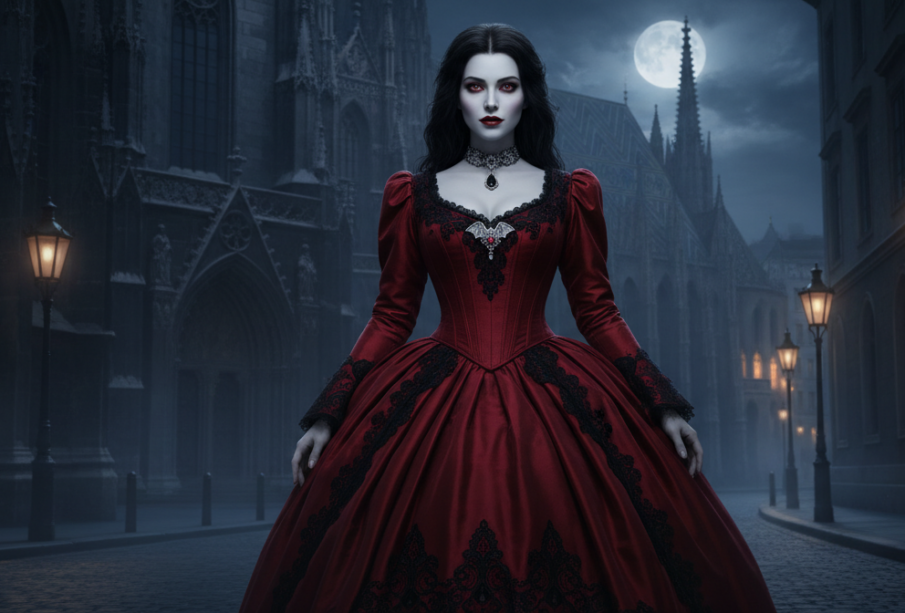
The French cinema legend trades psychological torment for gothic glamour in Ulrike Ottinger’s campy vampire romp that’s been decades in the making.
A Role She Was Born to Play
Let’s be honest – casting Isabelle Huppert as a vampire feels like the most obvious choice in cinema history. After five decades of playing women with ice in their veins and secrets in their hearts, the French acting legend finally gets to literally drain people dry in ‘The Blood Countess’, which just had its world premiere at the 2026 Berlinale.
Directed by Ulrike Ottinger, the 84-year-old German New Wave maverick who’s been trying to make this film for over 25 years, the movie reimagines the legendary Countess Elizabeth Báthory as a centuries-old vampire who awakens in modern-day Vienna. And honestly? Huppert’s natural aristocratic hauteur and that trademark opaque gaze have never been more perfectly matched with a character.
From Sewers to High Society
The film opens with Huppert’s Blood Countess gliding through Vienna’s underground waterways like she’s on a royal barge, emerging into the 21st century with her devoted maid Hermine (played by Birgit Minichmayr) in tow. Their mission? Track down a mysterious book that could destroy all vampires if it falls into the wrong hands.
But this isn’t your typical vampire hunt. Ottinger, working with a script co-written by Nobel laureate Elfriede Jelinek (who also penned ‘The Piano Teacher’), has crafted what critics are calling a ‘baroque vampire mystery’ that’s equal parts horror and high camp. The countess must deal with her vegetarian vampire nephew Rudi (Thomas Schubert), his therapist (Lars Eidinger), and a parade of eccentric Viennese characters who seem ripped from a Pynchon novel.
Gothic Glamour Meets Modern Absurdity
What makes this Blood Countess different from previous iterations – and there have been many, from Julie Delpy’s 2009 take to countless B-movie versions – is Ottinger’s commitment to pure visual spectacle. Cinematographer Martin Gschlacht, fresh off his Silver Bear win for ‘The Devil’s Bath,’ bathes every frame in crimson, while costume designer Jorge Jara Guarda has created what reviewers are calling ‘eye-poppingly operatic’ creations.
The film runs a hefty two hours, which some critics found excessive for what’s essentially an extended riff on Huppert being fabulous. But when that riff includes scenes of the countess donning sunglasses after dispatching victims in public bathrooms and making triumphal entrances to the Radetzky March, you start to understand the appeal.
A Decades-Long Dream Project
Ottinger first wrote the screenplay back in 1998 – ‘in the last century,’ as she jokes – and had Huppert in mind from the very beginning. The two have been in discussions for nearly 20 years, but financing proved elusive for what Ottinger admits is ‘an expensive film.’
When the money finally came together, Huppert ‘immediately joined the team,’ bringing her multilingual skills to bear – she speaks both French and German in the film. For Ottinger, this represents a return to narrative filmmaking after three decades focused primarily on ethnographic documentaries.
Camp Meets Art House
Early reviews suggest ‘The Blood Countess’ works best when it fully commits to its campy premise. Huppert, lit like a Golden Age Hollywood star throughout, delivers what critics are calling a ‘maximally domineering’ performance that’s less psychological character study and more iconic archetype.
‘What is interesting with Isabelle is that she is usually associated with very psychological, carefully constructed roles,’ Ottinger explained. ‘Here, the countess is iconic. It is not a psychological role. She is despotic and completely in control of her surroundings.’
The film is being distributed internationally by Magnify, and while it may not match the intellectual rigor of Huppert’s collaborations with Michael Haneke, it offers something rarer: the chance to see one of cinema’s most formidable actresses simply having a bloody good time.




Leave a reply



We bring you daily news from around the world. From technology to lifestyle to design and music.