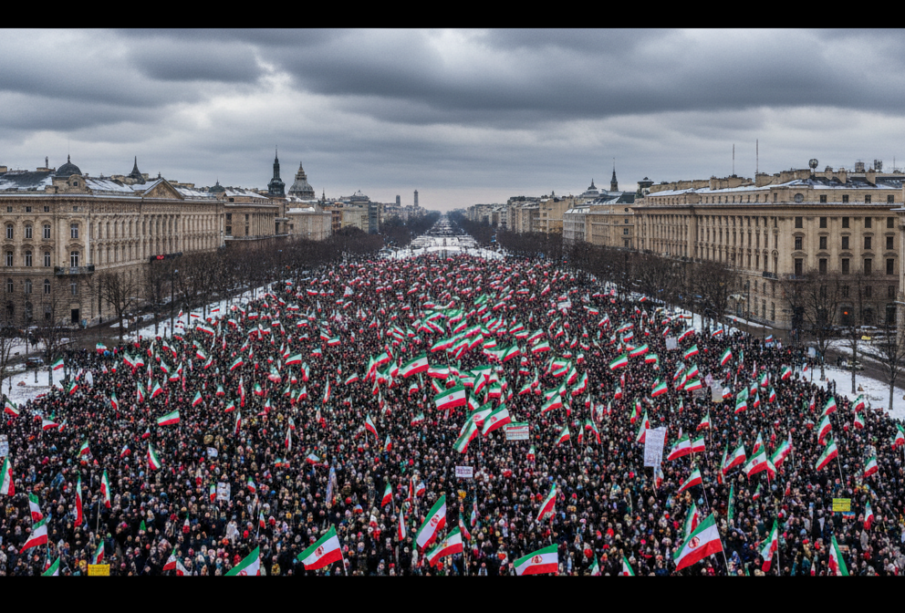
As 250,000 people flooded the streets of Munich and hundreds of thousands more rallied worldwide, exiled Crown Prince Reza Pahlavi laid out a transitional government plan while the U.S. military quietly prepared for weeks-long operations against Iran.
A Quarter Million Voices in Munich
Think of a crowd so large it could fill three NFL stadiums. That’s roughly what happened in Munich on Saturday, February 14, 2026, when over 200,000 people gathered in one of the largest Iranian diaspora demonstrations in history. Reza Pahlavi, the exiled son of Iran’s last shah, had designated the date as a ‘global day of action,’ and the response exceeded all expectations. Munich police confirmed the turnout far surpassed initial estimates, doubling the organizers’ own projections of 100,000.
The demonstrators marched with pre-1979 Iranian flags bearing the lion and sun emblem, beat drums, and chanted slogans demanding regime change. Some had traveled from as far as Switzerland to join the rally. The timing was no accident. The Munich Security Conference, running February 13-15, had drawn the world’s top diplomats and defense officials to the same city, guaranteeing maximum global attention.
But Munich was just one node in a worldwide network of protest. In Toronto, police estimated 350,000 people turned out for a solidarity march in North York. Los Angeles and Sydney also hosted major gatherings. According to Reuters, demonstrations unfolded simultaneously in more than 73 cities worldwide.
Pahlavi’s Transitional Blueprint
At the heart of the day’s events was Pahlavi’s appearance at the Munich Security Conference itself, where he laid out what he called an Emergency Transitional Government Plan. The proposal centers on two institutions: a temporary executive team to manage the immediate aftermath of any regime collapse, and a National Uprising Council to serve as a strategic advisory body. The executive team would dissolve once a formal transitional government is established, while the council would function as a provisional legislature until the first elected parliament convenes.
It’s worth pausing here to note what Pahlavi explicitly said he is not seeking: permanent political power. He has promised to lead a two-year transitional government before handing authority to democratically elected leaders. He also reached out to regime insiders, offering what he described as a ‘wide tent’ for anyone without blood on their hands. He drew a deliberate contrast with the de-Baathification process in Iraq, which many analysts blame for fueling the insurgency that followed Saddam Hussein’s fall.
Ukrainian President Volodymyr Zelenskyy met with Pahlavi on the sidelines of the conference, an extremely rare high-level meeting for the exiled prince. While the United States has expressed support for Iranian protesters, Washington has not formally endorsed Pahlavi or any other opposition leader.
The Shadow of Military Force
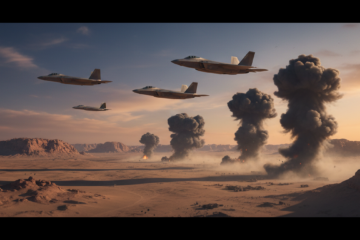
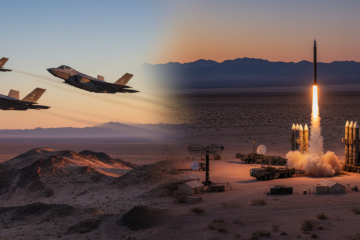
Behind the diplomatic speeches and protest chants, a far more ominous development was unfolding. Reuters reported on Friday that the U.S. military is preparing for the possibility of sustained, weeks-long operations against Iran if President Donald Trump orders an attack. Two U.S. officials, speaking anonymously due to the sensitivity of the planning, described preparations that go well beyond last year’s limited strikes.
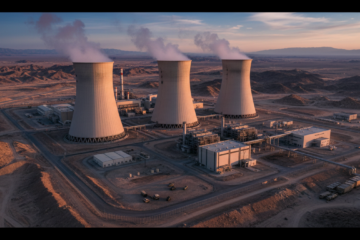
Here’s the critical distinction. In June 2025, the U.S. and Israel conducted Operation Midnight Hammer, a one-off strike on three Iranian nuclear facilities at Fordow, Natanz, and Isfahan. The current planning is fundamentally different. In a sustained campaign, U.S. forces could target Iranian state and security facilities, not just nuclear infrastructure. Officials said Washington fully expects Iranian retaliation, leading to back-and-forth strikes over an extended period.
Trump, speaking to troops at a base in North Carolina, said it had ‘been difficult to make a deal’ with Iran. White House spokesperson Anna Kelly stated that ‘President Trump has all options on the table with regard to Iran.’ The Pentagon declined to comment. The U.S. has deployed the USS Abraham Lincoln carrier strike group to the region, along with approximately 35 F-15E Strike Eagles to Jordan and additional air and naval assets.
The Human Cost That Sparked It All
None of this is happening in a vacuum. The protests that erupted inside Iran on December 28, 2025, began as economic grievances. The Iranian rial had plunged to 1.42 million against the U.S. dollar, a 56 percent drop in just six months. Food prices soared by an average of 72 percent. Shopkeepers in Tehran’s Grand Bazaar shuttered their businesses first, and within days the movement had spread to 17 of Iran’s 31 provinces.
Then the demands shifted from economic to political. And then came the crackdown. The numbers are staggering and, I should note, difficult to verify independently due to Iran’s internet blackout imposed from January 8. The U.S.-based Human Rights Activists News Agency documented 6,964 confirmed deaths as of February 5, with over 11,000 additional cases under review. Internal estimates from Iran’s own Ministry of Health reportedly indicated at least 30,000 killed in the first 48 hours alone. Tens of thousands have been arrested. The EU designated the Islamic Revolutionary Guard Corps as a terrorist organization in response.
Reports have emerged of forced confessions broadcast on state television, doctors arrested for treating wounded protesters, and the use of foreign Shia militias to suppress demonstrations.
Diplomacy on a Knife’s Edge
What makes this moment so volatile is the collision of multiple forces. U.S. and Iranian diplomats held indirect talks in Oman last week, attempting to revive negotiations over Tehran’s nuclear program. Iran has said it is willing to discuss curbs on enrichment in exchange for lifting sanctions, but has ruled out linking the issue to its missile program. Israeli Prime Minister Benjamin Netanyahu met Trump in Washington on Wednesday, insisting any agreement must include ‘the elements that are vital to Israel.’
Trump himself has called regime change in Iran ‘the best thing that could happen.’ On Thursday, he warned that the alternative to a diplomatic solution would be ‘very traumatic.’
Meanwhile, Iran’s Revolutionary Guards have warned they could retaliate against any U.S. military base in the region. Iran has received Russian MiG-29 jets and Mi-28NE gunships. The IRGC’s commander cautioned that the force had its ‘finger on the trigger.’ The U.S. maintains bases throughout the Middle East, including in Jordan, Kuwait, Saudi Arabia, Qatar, Bahrain, the UAE, and Turkey.
What Comes Next
The honest answer is: nobody knows. The situation contains so many variables that confident predictions are irresponsible. What we can say is that the scale of diaspora mobilization is unprecedented. The military buildup is the largest since the June 2025 strikes. And the diplomatic window, while still open, is narrowing.
For the millions of Iranians inside the country, still largely cut off from the internet and facing the threat of execution for protesting, the stakes could not be higher. As one protester’s sign in Toronto read, ‘We don’t have any other option.’ Whether the world’s response matches the urgency of their situation remains the defining question of this crisis.

Leave a reply



We bring you daily news from around the world. From technology to lifestyle to design and music.