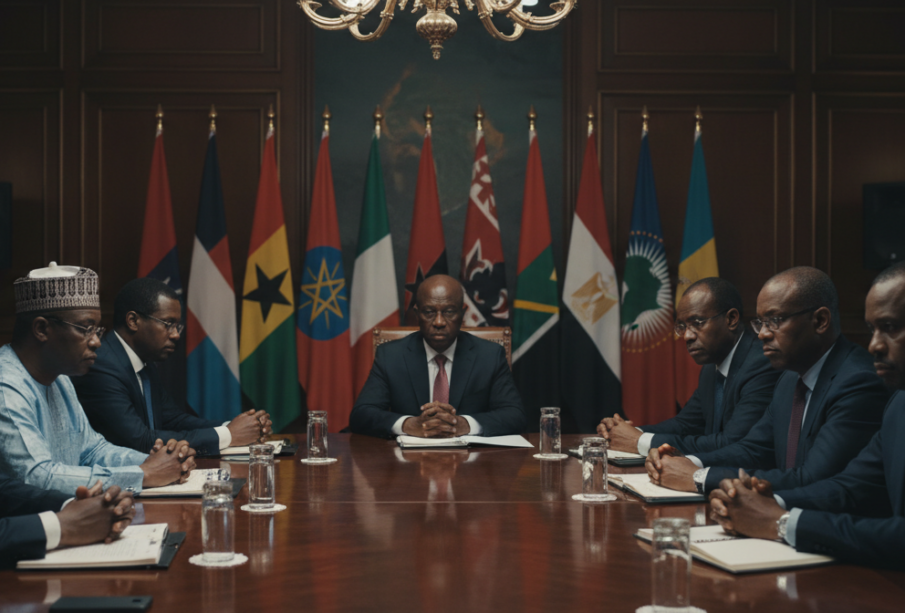
Ghana’s Foreign Minister Samuel Okudzeto Ablakwa made a rare visit to a Ukrainian prisoner-of-war camp, meeting two Ghanaian citizens caught in a web of deception that has ensnared over 1,700 Africans in Russia’s war machine.
A Rare Glimpse Behind Fortified Walls
In what officials described as an unprecedented diplomatic gesture, Ghana’s Foreign Minister Samuel Okudzeto Ablakwa was granted access to a highly fortified Ukrainian detention facility on February 26, 2026. The visit marked the first time an African foreign minister had been permitted to enter such a facility, highlighting the gravity of a crisis that has quietly unfolded across the continent.
Inside the camp, Ablakwa met with two Ghanaian citizens who had been captured while fighting alongside Russian forces. ‘I can confirm that our citizens are alive and well,’ Ablakwa stated, noting that their treatment under international law had been ‘commendably respected by Ukrainian authorities.’ The minister expressed gratitude to Ukrainian President Volodymyr Zelenskyy and Foreign Minister Andrii Sybiha for facilitating the unprecedented visit.
The Scope of Deception
The two Ghanaians represent just a fraction of a much larger tragedy. Ukrainian officials revealed that more than 1,780 African citizens from 36 countries are currently fighting in Russian ranks, many having been lured through sophisticated trafficking networks that prey on economic desperation.
These networks operate with chilling efficiency. Recruiters promise high-paying jobs – sometimes offering monthly salaries of up to $2,400 (approximately 55,000 Kč) plus bonuses reaching $8,300 (about 192,000 Kč). Instead, victims find themselves thrust into combat zones after minimal training lasting as little as nine days. The deception is complete: passports confiscated, promises broken, and young men who thought they were seeking legitimate employment suddenly facing life-or-death situations in a foreign war.
Recent arrests underscore the international nature of these operations. Kenyan authorities charged Festus Omwamba with trafficking 25 Kenyans to Russia, while intelligence reports suggest over 1,000 Kenyans have been recruited through similar schemes.
From Victims to Advocates
Perhaps most striking was what the detained Ghanaians told their foreign minister during his visit. Both men expressed a desire to become advocates against the very networks that had ensnared them. ‘They are determined to become advocates against the modus operandi of trafficking networks and are willing to devote the rest of their lives to educating vulnerable Africans on how to avoid such predicaments,’ Ablakwa reported.
This transformation from victim to advocate reflects a broader understanding of how these networks operate. They target the vulnerable – unemployed youth, former military personnel, and those seeking better opportunities abroad. The promise of legitimate work in Europe becomes a pathway to exploitation and potential death on Ukrainian battlefields.
A Continental Response Takes Shape
The crisis has prompted action across Africa. Ghana, which will assume the African Union presidency next year, plans to launch continent-wide awareness campaigns about these trafficking networks. The country’s diplomatic engagement with Ukraine has expanded beyond the immediate humanitarian crisis to include broader cooperation in agriculture, defense, education, and trade.
Meanwhile, other African nations are taking their own measures. Togo’s Foreign Ministry has warned citizens to verify scholarship offers from Russian organizations, while South Africa recently secured the return of 11 nationals who had been ‘lured’ into fighting for Russia.
The human cost continues to mount. Reports suggest that of nearly 1,500 Africans enlisted between 2023 and mid-2025, 316 have died – a devastating 22% mortality rate. As one Ukrainian official grimly noted, Russia appears to be using foreign fighters as ‘disposable’ troops in frontal assaults, allowing more experienced Russian forces to advance afterward.
Ablakwa’s diplomatic mission represents more than just a humanitarian gesture – it’s a recognition that this crisis requires coordinated international action to protect vulnerable populations from exploitation and to hold accountable those who profit from human trafficking disguised as employment opportunity.



Leave a reply



We bring you daily news from around the world. From technology to lifestyle to design and music.