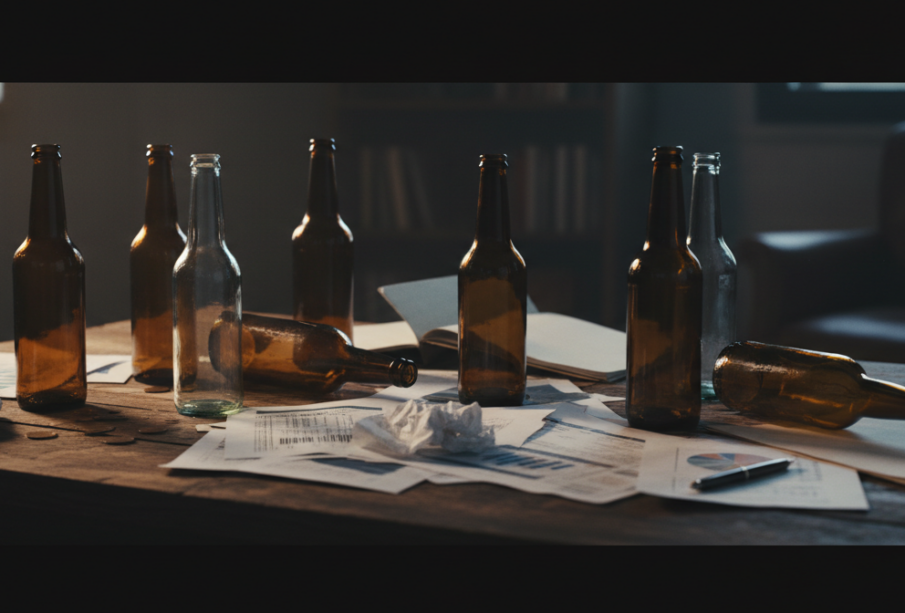
Once valued at $1.3 billion and hailed as a craft beer revolution, BrewDog now faces a potential breakup that could leave its 220,000 small investors with nothing from their $500 average stakes.
The Punk Dream Turns Sour
Richard Fisher thought he was backing the next big thing. The 58-year-old former business adviser from Suffolk invested $15,600 (approximately £12,000) in BrewDog, drawn by what seemed like a revolutionary approach to craft brewing. ‘Maverick, independent, to a certain extent rebellious – it was all good stuff,’ he recalls.
Fisher was one of approximately 220,000 investors who bought into BrewDog’s ‘Equity for Punks’ crowdfunding scheme between 2009 and 2021. Most put in around $650 (roughly £500), purchasing shares at $26-39 (£20-30) each. The Scottish brewery, founded by James Watt and Martin Dickie in 2007, positioned itself as the antithesis of corporate beer giants.
But now, with BrewDog preparing for a potential sale after five consecutive years of losses totaling $192 million (£148 million), Fisher and thousands like him face the stark reality of losing everything. ‘My shares have effectively been worthless for the last two or three years,’ he says.
The $1 Billion Deal That Changed Everything
The seeds of today’s crisis were planted in 2017, when BrewDog struck what appeared to be a triumphant deal with TSG Consumer Partners, a San Francisco-based private equity firm. The $276 million (£213 million) investment valued BrewDog at $1.3 billion (£1 billion), instantly creating what seemed like massive returns for early investors.
However, the deal’s structure would prove devastating for ordinary shareholders. TSG didn’t receive regular shares like the crowdfunding investors. Instead, they were granted ‘preference shares’ with an 18% compound annual return – meaning their investment would grow exponentially each year until an exit event like a sale or IPO.
By 2025, TSG’s original $276 million investment has ballooned to over $1 billion (£800 million) in what they’re owed. With BrewDog’s current enterprise value estimated at just $650 million (£500 million), there’s likely nothing left for anyone else. As one legal expert noted, TSG’s preference shares didn’t just dilute other investors – they ‘dominated’ the entire capital structure.
From Unicorn to Fire Sale
BrewDog’s rapid decline has been as dramatic as its rise. The company that once boasted four breweries across three continents and over 100 bars has been hemorrhaging money since 2019. In 2024 alone, it posted a $47.5 million (£36.6 million) pre-tax loss on revenues of $463 million (£357 million).
The brewery has appointed restructuring specialists AlixPartners to manage a potential sale, with industry analysts suggesting the company could be broken up and sold in pieces. The 72-bar network might attract hospitality groups, while major brewers like Heineken or Carlsberg could eye the production facilities in Scotland, the United States, Australia, and Germany.
Co-founder James Watt, who stepped down as CEO in 2024, is reportedly exploring options to buy back parts of the business he built. Meanwhile, his co-founder Martin Dickie left the company entirely in 2025, citing personal reasons. The irony is palpable: the founders who once promised to never sell to ‘monolithic purveyors of industrial beer’ may now see their creation dismantled by financial necessity.
Lessons from a Crowdfunding Catastrophe
The BrewDog saga serves as a cautionary tale about the risks of crowdfunding investments, particularly when institutional investors receive preferential treatment. Many of the 220,000 ‘Equity Punks’ were beer enthusiasts who believed they were supporting an authentic craft brewery, not sophisticated investors who understood complex capital structures.
Chris Huish from South Wales, who invested $650 (£500), used his 15% shareholder discount to buy BrewDog beer for years. But as the brand became widely available in supermarkets at competitive prices, even that perk lost its value. ‘I have no idea how much my shares are worth now,’ he admits. ‘There’s not much transparency on that.’
The company stopped holding ‘trading days’ where shareholders could buy or sell shares in 2022, effectively trapping investors in their positions. For Richard Fisher, the experience has been deeply disillusioning: ‘We’ve basically just put money in to buoy up their business and there’s no way we can now sell it.’ As BrewDog’s potential sale looms, it appears the only winners from this punk revolution will be the private equity firm that structured the deal to ensure they got paid first.




Leave a reply



We bring you daily news from around the world. From technology to lifestyle to design and music.